
Hardware cheat devices are defined as external hardware components that read game memory directly from a computer without running any cheat software on the gaming PC itself. This approach, built on Direct Memory Access (DMA) technology, is why these devices evade kernel-level anti-cheat systems used in titles like Valorant and Escape from Tarkov. Understanding how hardware cheat devices work gives you a real edge in knowing what separates a detectable software cheat from a hardware solution that operates completely outside the reach of traditional scans. Midnight-market builds its entire product line around this principle.
How do hardware cheat devices work?
Hardware cheat devices exploit a legitimate computer feature called Direct Memory Access, or DMA. DMA is a hardware mechanism that lets devices read and write system memory without involving the CPU. Cheat hardware repurposes this feature to silently pull game data, such as player positions and item locations, directly from RAM.
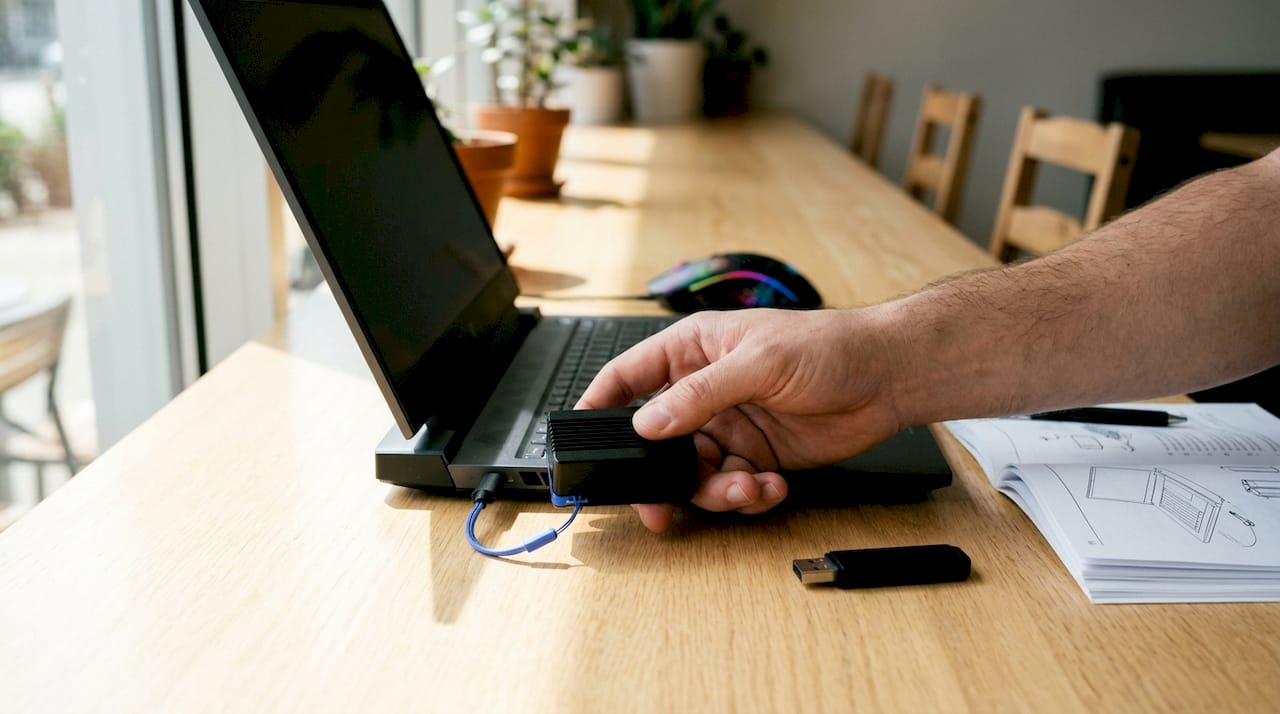
The critical detail is where the cheat logic lives. DMA cheat hardware runs on a separate small computer and delivers cheat information to the user through an external display, leaving zero trace on the gaming PC. That separation is what makes kernel-level detection ineffective against these devices.
Most DMA cheat setups connect to the gaming PC through a PCIe slot or a Thunderbolt port. Common hardware includes FPGA cards and compact single-board computers. The gaming PC sees what looks like a normal peripheral, while the second device reads memory and processes cheat data in real time.
- PCIe-based setups: A card slots directly into the motherboard. Fast and reliable, but physically visible inside the case.
- Thunderbolt-based setups: An external device connects via Thunderbolt. Portable, easy to disconnect, and harder to spot during a physical inspection.
- FPGA cards: Field-programmable gate arrays that can be configured to mimic specific hardware identities, adding a layer of stealth.
- Raspberry Pi or similar boards: Lower-cost options used to process the memory data and render overlays on a second screen.
Pro Tip: The cheat software never touches the gaming PC's storage or processes. Anti-cheat scanners that inspect running processes, loaded drivers, and file signatures find nothing because there is nothing to find.
How do modern anti-cheat systems detect hardware cheat devices?
Anti-cheat developers did not ignore DMA threats. Detection has shifted from pure software scanning toward hardware-level inspection. The result is a more complex arms race than most gamers realize.
IOMMU enforcement is the most effective hardware defense currently available in common gaming PCs. IOMMU, which stands for Input-Output Memory Management Unit, restricts which devices can access which memory regions. Without strict IOMMU configuration, any PCIe device can read any physical memory address. With it enabled, unauthorized DMA cards get blocked at the hardware level before they read a single byte.
Secure Boot and TPM 2.0 are now standard requirements for ranked modes in major competitive titles. These requirements push IOMMU restrictions into effect and make it harder for unsigned or spoofed devices to operate without triggering alerts. Anti-cheat teams treat these as baseline hardware hygiene, not optional extras.
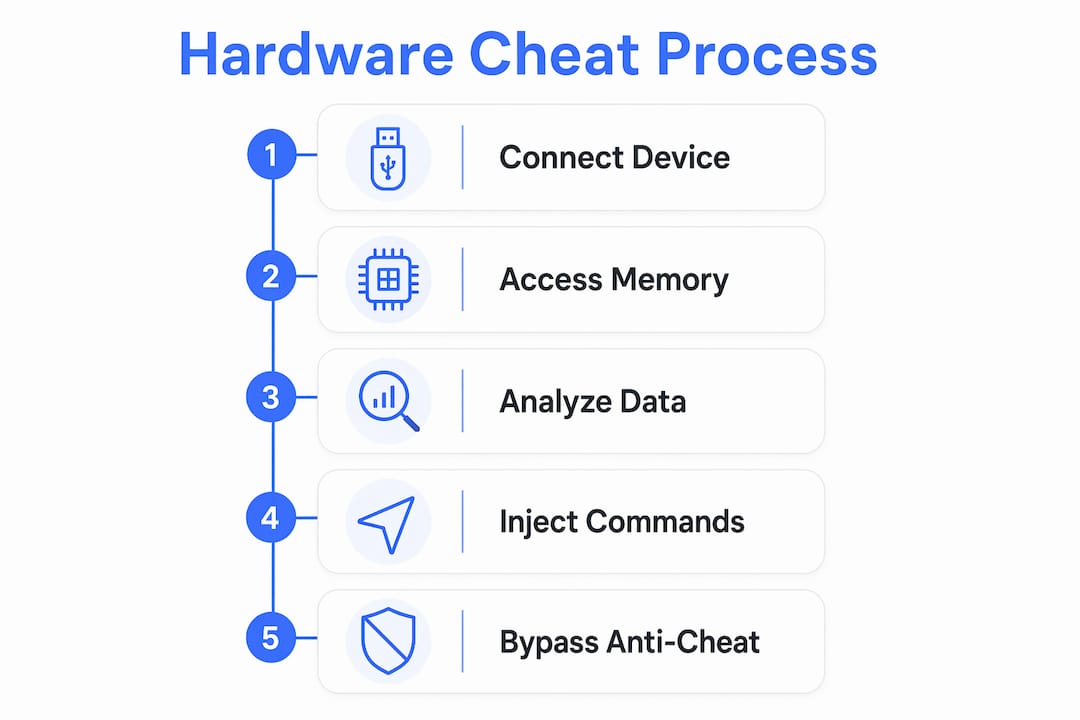
Beyond IOMMU, anti-cheat systems profile PCIe bus devices to detect uncommon device IDs or firmware timing characteristics that indicate unauthorized DMA cards. A card whose identifiers do not match any known legitimate hardware, or whose response timing falls outside normal ranges, raises a flag.
| Anti-cheat countermeasure | What it targets | Cheat hardware evasion tactic |
|---|---|---|
| IOMMU enforcement | Unauthorized memory access | Exploiting misconfigured IOMMU settings |
| PCIe device ID scanning | Unknown or spoofed device identifiers | Firmware cloning of real hardware IDs |
| Firmware timing analysis | Abnormal I/O response patterns | Behavioral masking to mimic real devices |
| Secure Boot and TPM 2.0 | Unsigned drivers and boot-level tampering | Thunderbolt tunneling with signed driver stacks |
| Machine learning heuristics | Unusual memory access patterns | Randomized access timing and pattern variation |
The challenge for anti-cheat teams is that legitimate hardware and spoofed cheat hardware can look nearly identical at the bus level. That is where firmware quality becomes the deciding factor.
What role does firmware spoofing play in hardware cheat stealth?
Firmware spoofing is the practice of programming a cheat device to present itself as a known, trusted piece of hardware. The goal is to make the anti-cheat system see a real SSD or eGPU instead of a DMA card.
Good firmware mimics device IDs, SMART data, and I/O patterns to avoid detection by appearing as a benign device. This goes beyond just copying a device name. High-quality spoofed firmware replicates the exact timing of read and write operations, the power state transitions, and the error reporting behavior of the real device it impersonates.
Thunderbolt tunneling takes this further by hiding the real DMA card behind a signed driver stack, making the device appear as legitimate storage or a display peripheral. Because the driver is signed by a real vendor, the operating system and anti-cheat software treat the connection as trusted. This is why Thunderbolt-based DMA setups carry lower detection risk than direct PCIe plug-in cards.
The quality gap between firmware tiers is significant:
- Basic firmware: Copies only the device ID. Fails timing and behavioral checks quickly.
- Good firmware: Replicates ID, SMART data, and standard I/O patterns. Achieves 80–90% undetectability for extended periods.
- High-tier firmware: Full behavioral cloning including power states and error logs. Surpasses 95% undetectability against most current scans.
Pro Tip: Buying a DMA card is only half the equation. Poorly crafted firmware triggers anti-cheat heuristics fast. The firmware quality determines how long a setup stays undetected, not the card itself.
What are the practical implications for gamers using hardware cheat devices?
Hardware cheat rigs are not plug-and-play purchases. The cost and complexity separate them from simple software cheats.
- Budget: Assembling a functional DMA rig costs several hundred dollars. Entry-level setups start around $300, and high-end configurations with quality FPGA cards and premium firmware can reach $800 or more.
- Setup complexity: You need a second PC or single-board computer to run the cheat logic, a compatible PCIe or Thunderbolt connection, and correctly configured firmware. Mistakes in any step increase detection risk.
- Detection risk: Anti-cheat hardware detection is shifting toward deep PCIe bus inspection and hardware identity verification. Machine learning models now flag behavioral anomalies that rule-based scanners miss.
- Portability advantage: Thunderbolt-based setups are compact and disconnect in seconds. This makes them practical for LAN events or shared setups where physical inspection is a concern.
- Community and marketplace: Active Discord servers and private forums drive hardware cheat sales and firmware updates. These communities share detection reports, firmware patches, and setup guides in near real time.
The ongoing arms race between firmware spoofing and hardware validation will continue to escalate. Real-time hardware behavior analysis and machine learning are the next frontier for anti-cheat teams. Gamers using hardware cheats today should expect detection methods to tighten significantly over the next 12–24 months.
Key Takeaways
Hardware cheat devices work by separating cheat logic from the gaming PC entirely, using DMA technology to read memory through external hardware that anti-cheat software cannot scan.
| Point | Details |
|---|---|
| DMA is the core mechanism | Cheat hardware reads game memory via PCIe or Thunderbolt without running code on the gaming PC. |
| Firmware quality determines stealth | High-tier spoofed firmware achieves over 95% undetectability; basic firmware fails behavioral checks quickly. |
| IOMMU is the strongest defense | Properly configured IOMMU hardware blocks unauthorized DMA memory access at the hardware level. |
| Thunderbolt setups carry less risk | Signed driver stacks and tunneling make Thunderbolt-based DMA harder to detect than direct PCIe cards. |
| Detection is evolving fast | Anti-cheat systems now use PCIe bus profiling and machine learning, not just software signature scans. |
The arms race nobody talks about honestly
I have followed the hardware cheat space long enough to say this plainly: most gamers who ask about DMA cheats are thinking about the wrong variable. They focus on the card. The card is almost irrelevant. What actually determines whether you get banned is the firmware running on it, and the quality gap between tiers is enormous.
The anti-cheat side is not standing still either. The shift toward hardware-level inspection, IOMMU enforcement, and machine learning behavioral analysis represents a genuine leap in detection sophistication. Software cheats are largely a solved problem for modern anti-cheat teams. Hardware cheats are the current frontier, and both sides know it.
What I find genuinely interesting is how the Thunderbolt attack surface changed the game. A device that connects externally, uses a signed driver, and mimics a storage peripheral is a fundamentally harder problem than a rogue PCIe card. Anti-cheat teams have to balance aggressive detection against false positives that would flag legitimate hardware. That tension is where the best firmware developers operate.
For gamers who want to understand this space beyond curiosity, the honest advice is to treat firmware quality as the single most important variable in any hardware cheat setup. Everything else is secondary.
— Fonics
Midnight-market's hardware cheat solutions for serious gamers
Gamers who want hardware-level advantages backed by daily testing and live support will find what they need at Midnight-market.

Midnight-market carries a full range of DMA cheat hardware and software solutions tested daily across titles including Valorant, Escape from Tarkov, Apex Legends, and more. Every product in the Midnight-market store goes through rigorous detection checks before it reaches you, and live Discord support means you get real answers when you need them. Hardware warranties and instant delivery round out a service built for gamers who take their setup seriously.
FAQ
What is DMA cheat hardware?
DMA cheat hardware is an external device that reads game memory directly via PCIe or Thunderbolt without running cheat software on the gaming PC. Because no cheat code runs on the host machine, kernel-level anti-cheat scans find nothing to detect.
How does hardware bypass anti-cheat software?
Hardware cheats bypass anti-cheat by keeping all cheat logic on a separate device. Anti-cheat scanners inspect processes, drivers, and memory on the gaming PC, none of which contain any cheat code when a DMA setup is used correctly.
What is the role of IOMMU in stopping hardware cheats?
IOMMU restricts which hardware devices can access which memory regions. Without strict IOMMU enforcement, any PCIe device can read any physical memory, which is the vulnerability DMA cheat cards exploit.
Why does firmware quality matter so much for DMA cheats?
Poor firmware triggers anti-cheat heuristics by failing timing and behavioral checks. High-quality firmware that clones a real device's ID, I/O patterns, and power states can sustain undetectability far longer than a basic copy.
How do hardware cheat communities operate?
Hardware cheat communities run primarily through private Discord servers and closed forums. Members share firmware updates, detection reports, and setup guides, creating a fast feedback loop that helps vendors patch detection vulnerabilities quickly.