
Low-quality cheats compromise accounts by delivering hidden malware that silently steals credentials, hijacks sessions, and hands attackers full control of your system. These aren't just sketchy programs that might get you banned. They are active threats targeting Discord tokens, browser passwords, crypto wallets, and game account data. Platforms like Discord, Roblox, and Minecraft are primary targets. Campaigns like Powercat and Vidar Stealer 2.0 show exactly how this works in practice. Understanding the mechanics behind these attacks is the first step toward protecting yourself.
How low quality cheats compromise accounts through malware
The core mechanism is deception. Attackers disguise malware as functional game cheats, then use them to steal Discord tokens, browser credentials, crypto wallets, and desktop screenshots. The cheat appears to work, so gamers keep it installed while the payload runs silently in the background.
Vidar Stealer 2.0 evades detection by creating hidden directories and adding itself to Windows Defender exclusions. It communicates through Telegram bots and Steam dead-drop resolvers, making its traffic look like normal app activity. Gamers find these fake cheats distributed on GitHub and Reddit, which adds a false layer of legitimacy.

The Powercat malware campaign uses a multi-stage infection chain. Stage one drops an infostealer. Stage two collects account attributes for targeted resale or blackmail. The malware targets Discord, Roblox, and crypto wallets specifically because those assets have immediate resale value.
| Malware method | Evasion tactic | Data targeted |
|---|---|---|
| Vidar Stealer 2.0 | Hidden directories, Defender exclusions | Browser credentials, Steam tokens |
| Powercat | AFK timers, multi-stage dropper | Discord tokens, crypto wallets |
| Generic infostealer | Telegram C2 channel | Screenshots, game account data |
| Token harvester | Disguised as cheat DLL | Discord session tokens |
Pro Tip: If your system shows new exclusions in Windows Defender that you did not set, treat it as a red flag. Run a full offline scan immediately and revoke all active Discord sessions from a clean device.
What happens to your account beyond the in-game ban
Most gamers assume the worst outcome is a game ban. The actual damage goes much further. Low-quality cheats collect hardware fingerprints for centralized ban lists, then sell those hardware IDs. This means your machine gets flagged permanently, and legitimate play becomes impossible without advanced spoofing tools.
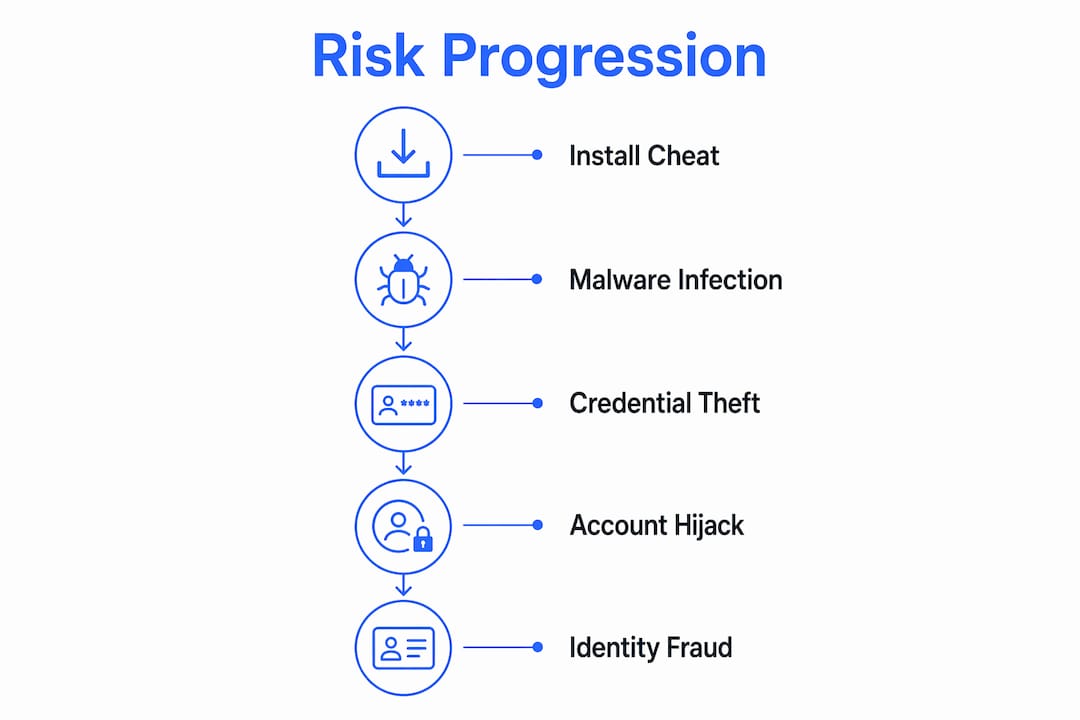
The risks extend well beyond gameplay. Stolen credentials open the door to identity theft, payment fraud, and account takeovers across every platform where you reuse a password. Esports players have faced public bans with financial consequences, losing sponsorships and prize eligibility over cheat-related incidents.
Powercat specifically targets minors by identifying age groups and capturing webcam footage for blackmail. That is not a theoretical risk. It is a documented tactic used in active campaigns.
Direct and indirect impacts of a compromised account include:
- Permanent hardware bans that block access to game servers across all titles
- Loss of in-game purchases, skins, and progression with no refund path
- Stolen payment methods linked to gaming platforms used for fraudulent charges
- Discord account hijacking used to scam your contacts
- Crypto wallet drain with no recovery option
- Reputational damage in gaming communities and esports circuits
- Potential legal exposure if the cheat software itself violates terms of service or local law
Why are low-quality cheats riskier than private or tested cheats?
The difference between a low-quality cheat and a professionally maintained one is not just detection rate. It is intent. Trust in cheat marketplaces is fragile, and red flags like anonymous payment methods and requests for system-level privileges often signal data harvesting rather than cheat delivery.
Low-quality cheats receive no maintenance after release. When anti-cheat software updates, these tools get caught immediately and expose every user who still has them installed. Private or professionally tested cheats go through regular update cycles to stay ahead of detection. That ongoing investment is what separates a functional tool from a trap.
Signature-based anti-cheat detection is reactive by design. It only catches cheats after their signatures are known. This creates a market where cheat developers profit by staying one step ahead, while low-quality providers cut corners and get caught fast, taking their users down with them.
Signs of a risky cheat source:
- Payment accepted only through anonymous methods like gift cards or unverified crypto
- The installer requests administrator or kernel-level privileges with no explanation
- No visible support channel, Discord server, or contact method
- No update history or version changelog available
- Distributed through GitHub repositories, Reddit threads, or Discord servers with no verified identity
- Claims of "lifetime undetected" status with no proof of testing methodology
- No refund policy or warranty on hardware products
Pro Tip: Before installing any cheat, search the provider's name alongside terms like "malware" or "ban wave." A reputable provider will have a visible community history and documented update logs.
How can you tell if your account or system is already compromised?
Compromise from a bad cheat rarely announces itself. Typical symptoms include unexpected UAC prompts, system slowdowns, unusual network connections to Telegram bots, and unauthorized activity on Discord or game platforms. Remote screenshot capture and token theft happen silently, so behavioral signs are often the only early warning.
A stolen Discord token is particularly dangerous. The attacker does not need your password. They use the token to impersonate you in real time, message your contacts, and join servers without triggering a login alert. You may not notice until friends report receiving scam messages from your account.
Steps to investigate a suspected compromise:
- Check your Discord login history and revoke all active sessions immediately
- Review Windows Defender exclusion lists for entries you did not create
- Run a network monitor like Wireshark or check your router logs for connections to unknown Telegram or Discord endpoints
- Scan with Malwarebytes in offline mode to catch active infostealers
- Change passwords for every platform from a clean device, not the potentially infected one
- Enable multi-factor authentication on all gaming and financial accounts
| Detection indicator | Possible cause | Recommended action |
|---|---|---|
| Unexpected UAC prompts | Malware requesting elevated access | Deny, then run offline malware scan |
| Unusual network traffic | Telegram or Discord C2 communication | Block endpoint, revoke tokens |
| Unauthorized login alerts | Stolen credentials or session token | Change password, enable MFA |
| Friends report scam messages | Discord token hijacked | Revoke all sessions, notify contacts |
| New Defender exclusions | Malware self-protecting | Remove exclusion, full system scan |
Gamers who choose to use cheats should treat provider selection as a security decision. Verified providers with daily testing, live support, and documented update histories reduce the risk of malware delivery significantly. Midnight-market, for example, runs daily product testing and offers live Discord support, which creates accountability that anonymous underground sources cannot match.
Key Takeaways
Low-quality cheats are malware delivery tools that compromise accounts, steal credentials, and cause hardware bans that outlast any single game.
| Point | Details |
|---|---|
| Malware disguised as cheats | Infostealers like Vidar Stealer 2.0 and Powercat hide inside fake cheats to steal tokens and passwords. |
| Damage goes beyond bans | Hardware fingerprinting, identity theft, and blackmail are documented outcomes of low-quality cheat use. |
| Provider quality determines risk | Tested, maintained cheats from verified sources carry far lower malware risk than anonymous underground tools. |
| Early detection is possible | UAC prompts, Defender exclusion changes, and unusual network traffic are warning signs of active compromise. |
| MFA and session hygiene matter | Revoking Discord sessions and enabling multi-factor authentication limits attacker access after a breach. |
The arms race nobody tells you about
The conversation around cheating almost always focuses on fairness. I think that framing misses the real story. The actual arms race is between malware authors and gamers who do not realize they are the target.
I have watched the cheat market evolve for years, and the pattern is consistent. Underground providers release a tool, gamers install it, and within weeks a ban wave hits. The provider disappears. The users are left with flagged hardware, compromised accounts, and sometimes stolen financial data. The provider was never in the cheat business. They were in the data harvesting business.
The "undetected" label is the most abused term in this space. Any cheat can be undetected for a week. What matters is whether the provider has the infrastructure to update it, test it daily, and support users when something changes. Behavioral detection methods, which analyze human input patterns rather than software signatures, are making this harder for everyone. Studios that adopt this approach will catch cheaters regardless of how well the software hides.
My honest view: if you are going to use cheats, treat it like a security decision. Verify the provider's track record. Confirm they have live support and a documented update history. Anonymous sources with no accountability are not selling you an advantage. They are selling you access to your own machine.
— Fonics
Midnight-market: tested cheats that do not cost you your account
Choosing the wrong cheat source costs more than a ban. It can cost you your Discord account, your payment details, and your hardware's ability to play at all.
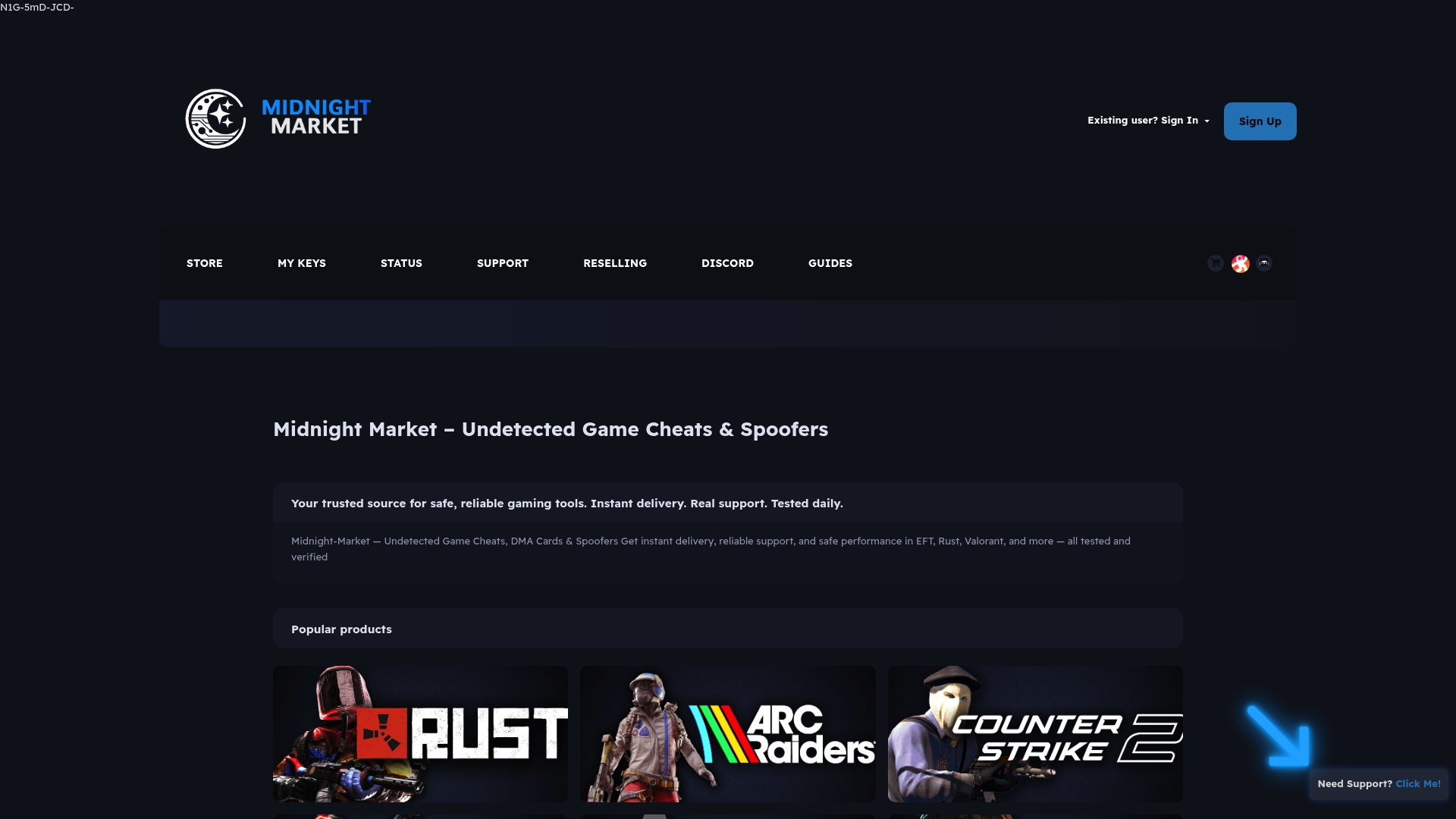
Midnight-market runs daily testing on every product in its catalog, covering titles like EFT, Valorant, and more. Products like Valorant DMA cheats and DMA hardware cards come with hardware warranties and live Discord support, so you are never left guessing about status or safety. The full store lists every available product with clear documentation, verified update histories, and a community that holds the platform accountable. That accountability is what separates a trusted provider from an anonymous trap.
FAQ
What malware do low-quality cheats typically deliver?
Low-quality cheats commonly deliver infostealers like Vidar Stealer 2.0 and Powercat, which steal Discord tokens, browser credentials, and crypto wallet data. These tools use Telegram bots and hidden directories to avoid detection.
Can a cheat compromise my account without getting me banned?
Yes. Malware embedded in cheats can steal your credentials and session tokens silently, long before any anti-cheat system flags the software. Account compromise and game bans are separate outcomes.
How does a stolen Discord token give attackers access?
A Discord token authenticates your session without requiring a password. Attackers who steal it can impersonate you in real time, message your contacts, and access your servers without triggering a login alert.
What is hardware fingerprinting in the context of cheats?
Hardware fingerprinting records unique identifiers from your machine and adds them to centralized ban lists. Low-quality cheat providers also sell these IDs, making it impossible to play on that machine without advanced spoofing tools.
How do I choose a cheat provider that won't compromise my account?
Look for providers with verified update histories, live support channels, documented testing practices, and a visible community. Avoid any source that requires anonymous payment or requests kernel-level system access without explanation.