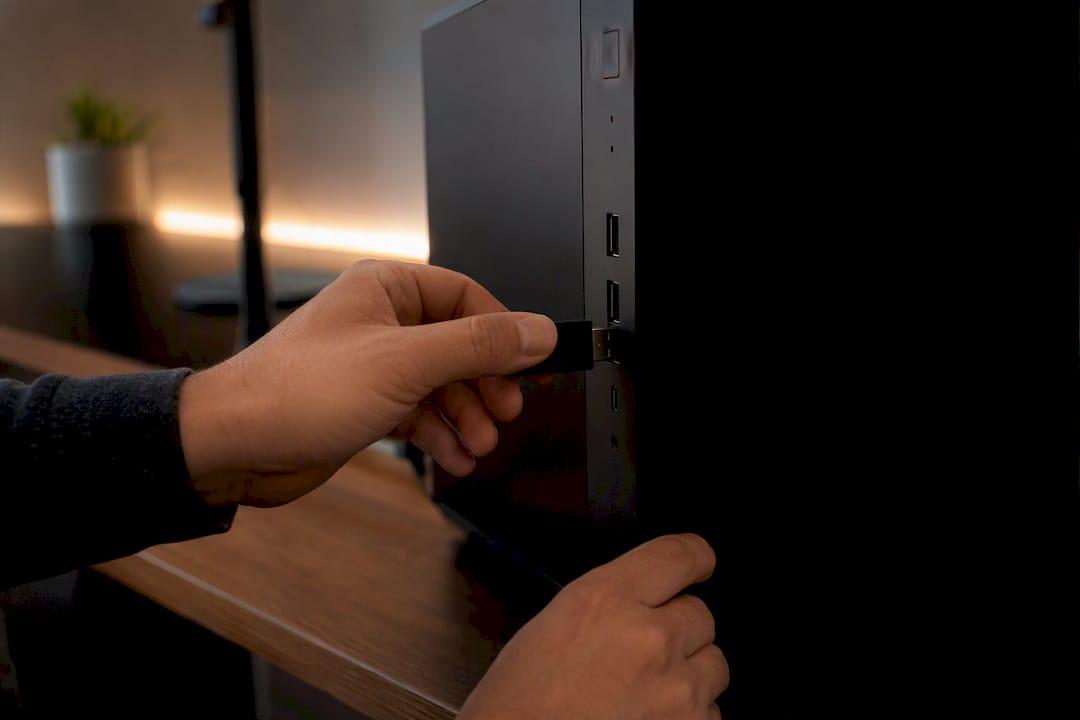
A digital cheat storefront is an online shop that sells undetected game cheats, HWID spoofers, and DMA hardware, then delivers access the moment payment clears. Understanding how digital cheat storefronts work means understanding three moving parts: instant key issuance, hardware ID masking, and physical DMA devices that read game memory without touching the target PC's software stack.
- Instant delivery runs on payment webhooks that trigger license grants and download tokens within seconds.
- HWID spoofers intercept hardware queries at the kernel level to hide your device fingerprint from anti-cheat.
- DMA hardware moves memory access off the gaming PC entirely, onto a separate physical card.
Midnight Market builds its process around these same mechanics, backed by daily testing and live Discord support, both covered in detail below.
Key Takeaways
Digital cheat storefronts combine automated payment webhooks, kernel-level HWID spoofing, and external DMA hardware to deliver undetected access instantly while shifting detection risk across three distinct technical layers.
| Point | Details |
|---|---|
| Delivery is automated | Payment webhooks trigger license issuance and short-lived encrypted download tokens within seconds. |
| HWID spoofing is temporary | Most spoofers intercept kernel-level hardware queries but reset at reboot, requiring reactivation each session. |
| DMA runs on separate hardware | A DMA card reads and writes target memory over PCIe without executing code on the gaming PC. |
| Reseller panels drive scale | On-demand key generation removes inventory risk and speeds up updates across many titles. |
| Midnight Market centers verification | Daily testing, instant key delivery, live Discord support, and hardware warranties back its cheat and DMA hardware listings. |
Table of Contents
- How Do Cheat Storefronts Deliver Access Instantly?
- What Do Cheat Storefronts Actually Sell?
- How Do HWID Spoofers Actually Work?
- Why Is DMA Hardware Harder to Detect?
- How Do Reseller Panels Scale Cheat Distribution?
- What Detection Risks Come With "Undetected" Cheats?
- What Should You Check Before Buying From a Storefront?
- What Are the Legal and Ethical Risks of Buying Cheats?
- Marketplaces vs. Direct Sellers: What's the Difference?
- Subscription or One-Time Purchase: How Do Cheat Stores Make Money?
- How Do Cheats Actually Integrate With a Game?
- How Do Storefronts Find and Keep Customers?
- How Do Storefronts Avoid Takedowns and Legal Trouble?
- What People Get Wrong About "Undetected" Claims
- Where to Buy Once You Know What to Look For
- Sources
How Do Cheat Storefronts Deliver Access Instantly?
The moment you pay, a storefront's backend fires a webhook event that a payment processor sends automatically when a transaction clears. That event triggers license issuance without a human checking your order first.
Here's the actual sequence most storefronts run:
- You submit payment through Stripe or a crypto gateway at checkout.
- The processor sends a webhook to the store's server confirming the charge succeeded.
- The server generates a license key or activates one from a reseller panel's key pool.
- An encrypted, short-lived download token gets created and emailed or pushed to your account.
- You click the token link, which expires after a set window, and the file or license activates.
This is the same architecture legitimate digital marketplaces use. One developer who built a mod marketplace with Stripe described using presigned URLs with short expiry windows specifically to stop buyers from sharing download links after purchase. Guest checkout works the same way but skips account creation, issuing a one-time tokenized link instead.
Pro Tip: When you buy from a storefront, check whether your delivery email contains a token link with an expiration notice. No token, no expiry, no real delivery system, just a red flag.
To confirm a storefront handles this correctly, watch the checkout flow itself. Legitimate operations show a clear "processing" state, then redirect to a download page or send a Discord ping, not a generic "we'll email you within 24 hours" message. That delay usually means a human is manually generating your key, which is slower and more error-prone than automated issuance.
What Do Cheat Storefronts Actually Sell?
Storefronts list three distinct product categories, and each comes with its own set of purchase variables you need to check before buying.
- Cheat software: Delivered through a loader tied to a keyed license, these get updated every time a game patches its anti-cheat, sometimes within hours of a major title update.
- HWID spoofers: Kernel-mode drivers that mask your hardware identifiers, typically active for a single session unless the product advertises persistent or firmware-level spoofing.
- DMA hardware: Physical PCIe or FPGA cards, sometimes paired with actuators for input simulation, that require physical installation in a second PC.
Every listing worth trusting shows four things clearly: license duration (lifetime, monthly, or per-match), refund policy, delivery method, and the support channel you'll use if something breaks. If a listing buries or omits any of these, that's worth noting before you commit.
How Do HWID Spoofers Actually Work?
HWID spoofers work by intercepting hardware identification queries before they reach anti-cheat software, then substituting fake values in their place. This happens in kernel mode, the same privilege level anti-cheat engines run at, which is why basic spoofers can't fool advanced detection.
The interception typically targets specific system calls. Spoofers hook NtQuerySystemInformation or intercept IRP (I/O Request Packet) dispatches, substituting generated values for your disk serial, SMBIOS data, MAC address, NTFS volume serial, and sometimes TPM or BIOS UUID.
| Spoof Vector | What Gets Masked | Typical Persistence |
|---|---|---|
| Disk serial | Physical drive identifier | Until reboot |
| SMBIOS/BIOS UUID | Motherboard and system identity | Until reboot, unless firmware-level |
| MAC address | Network adapter identity | Session only |
| NTFS volume serial | Drive partition identifier | Until reboot |
| TPM/firmware ID | Trusted platform module fingerprint | Requires driver-mapped persistence |
Most spoofing persists only until you reboot, which means you reactivate the spoofer before launching your game every session. A smaller category of spoofer maps drivers at the firmware or EFI level for cross-reboot persistence, but that approach carries higher detection risk and can void hardware warranties if it interacts poorly with your motherboard firmware.
Pro Tip: Activate your spoofer before the anti-cheat driver loads, not after. Loading order matters because anti-cheat often caches hardware values at boot; spoofing after that cache is set does nothing.
Why Is DMA Hardware Harder to Detect?
DMA hardware sidesteps software anti-cheat entirely by moving the memory read/write operation onto a separate physical device. A typical setup pairs a cheat PC, a PCIe or FPGA DMA card, and sometimes an actuator for simulating mouse or controller input.
- The DMA card issues PCIe memory read and write transactions directly to the target gaming PC's RAM.
- No cheat code ever executes on the gaming PC itself, which removes an entire category of software-based detection.
- IOMMU (Input/Output Memory Management Unit) and ACS (Access Control Services) are the primary defensive mechanisms that can restrict or log this kind of cross-device memory access.
- Interrupt remapping adds another layer of isolation that limits what a DMA device can reach on a properly configured system.
The architectural separation between the cheat PC and the target PC is exactly why defenders treat DMA differently from kernel-mode software cheats. It's a different threat model, not a stronger version of the same one.
Emulated DMA cards often leak subtle differences from genuine donor hardware in their configuration space, gaps that careful PCIe-level inspection can still catch even when the card's outward behavior looks clean.
Donor-card cloning tries to mask these gaps by copying real hardware identifiers, but incomplete emulation of extended config space remains a known weak point. Installation itself is physical: you need a second PC, a compatible PCIe slot, and in most cases a direct memory access cable or M.2 adapter, so treat vendor claims about "plug and play" setup skeptically until you've read the actual installation notes.
How Do Reseller Panels Scale Cheat Distribution?
Reseller panels are the reason a single storefront can list dozens of games with weekly updates instead of a handful with occasional patches. Panels let resellers generate keys on demand rather than holding pre-made inventory, which removes the capital risk of stocking unsold licenses.
- Resellers buy access to a panel at wholesale rates, then set their own retail markup.
- No inventory means no dead stock: keys get minted at the moment of sale, not before.
- Mainstream payment rails, including Stripe and Apple Pay, sit alongside crypto acceptance to widen the buyer base.
- Wide distribution networks translate directly into faster patch turnaround after game updates break existing cheats.
This same distribution model is why reseller networks now run marketing operations that resemble legitimate e-commerce, complete with Discord communities and demo content. The tradeoff is exposure: the more visible and widely distributed a product becomes, the more attention it draws from anti-cheat vendors watching for patterns.
What Detection Risks Come With "Undetected" Cheats?
"Undetected" describes a current state, not a permanent guarantee. Anti-cheat engines load as kernel drivers, and detection timing depends on which loads first and how thoroughly it scans memory and hardware identifiers.
- Kernel-level anti-cheat can flag cheat drivers through direct memory scanning, especially if load order lets the anti-cheat driver initialize after the cheat's hooks are already in place.
- DMA hardware faces its own vectors: PCIe fingerprinting at the config-space level, IOMMU access logs, and behavioral analytics that flag statistically unusual aim or reaction patterns over time.
- Vendors that patch fastest after a game update keep detection windows shortest, which is the closest thing to a reliability signal buyers actually have.
No product stays undetected forever, and any storefront implying otherwise is overselling. What separates a credible vendor from a risky one is patch speed and transparency about known issues, not a marketing claim of permanent invisibility. Common mitigations, like pre-activating spoofers before launch, using clean account hygiene, and avoiding suspicious third-party VPN combinations, reduce risk without eliminating it.
What Should You Check Before Buying From a Storefront?
A few minutes of verification before checkout saves you from the storefronts that cut corners on the things that actually matter.
- Ask specifically which games are tested and how often, daily testing claims should name titles, not just say "regularly tested."
- Confirm the delivery mechanism sends a token or presigned link with a visible expiry, not a vague "check your email soon" promise.
- Verify the support channel is a live Discord server with active staff, not a ticket system with multi-day response times.
- Check hardware listings for explicit warranty terms in writing, not a verbal assurance in a sales chat.
Red flags stack up fast: anonymous developers with no public track record, inconsistent update schedules after major game patches, no refund policy, and missing security tokens at checkout.
Pro Tip: Ask in a storefront's Discord for proof of a recent update timestamp tied to a specific game patch. A vendor that can show this instantly is almost always more reliable than one that deflects the question.
What Are the Legal and Ethical Risks of Buying Cheats?
Using game cheats generally violates a game's terms of service, which is a contractual matter between you and the publisher, not typically a criminal one in most jurisdictions. That distinction matters because it shapes what actually happens if you get caught: account bans and hardware ID blacklisting, not police involvement, in the overwhelming majority of cases.
The ethical debate splits along a real fault line. Competitive integrity in ranked or tournament play suffers directly when cheats give one player an information or aim advantage others don't have access to. Casual play carries a different calculus, where the harm is more diffuse but still real for anyone matched against a cheating opponent.
Publishers have gotten more aggressive about legal action against cheat developers and large-scale distributors specifically, rather than individual end users. Lawsuits from companies like Riot Games and Activision have targeted cheat sellers directly, which is part of why storefronts increasingly rely on anonymous operational structures and offshore hosting.
For an individual buyer, the practical risk profile looks like this: a permanent or hardware-level ban is the realistic worst case, not a legal summons. That doesn't make the decision consequence-free. A hardware ban can follow your physical components across accounts and even across some games if a publisher shares ban data, which is a real cost against the temporary competitive edge a cheat provides.
Marketplaces vs. Direct Sellers: What's the Difference?
Digital cheat storefronts split into two structural types, and the difference shapes everything from pricing to support quality.
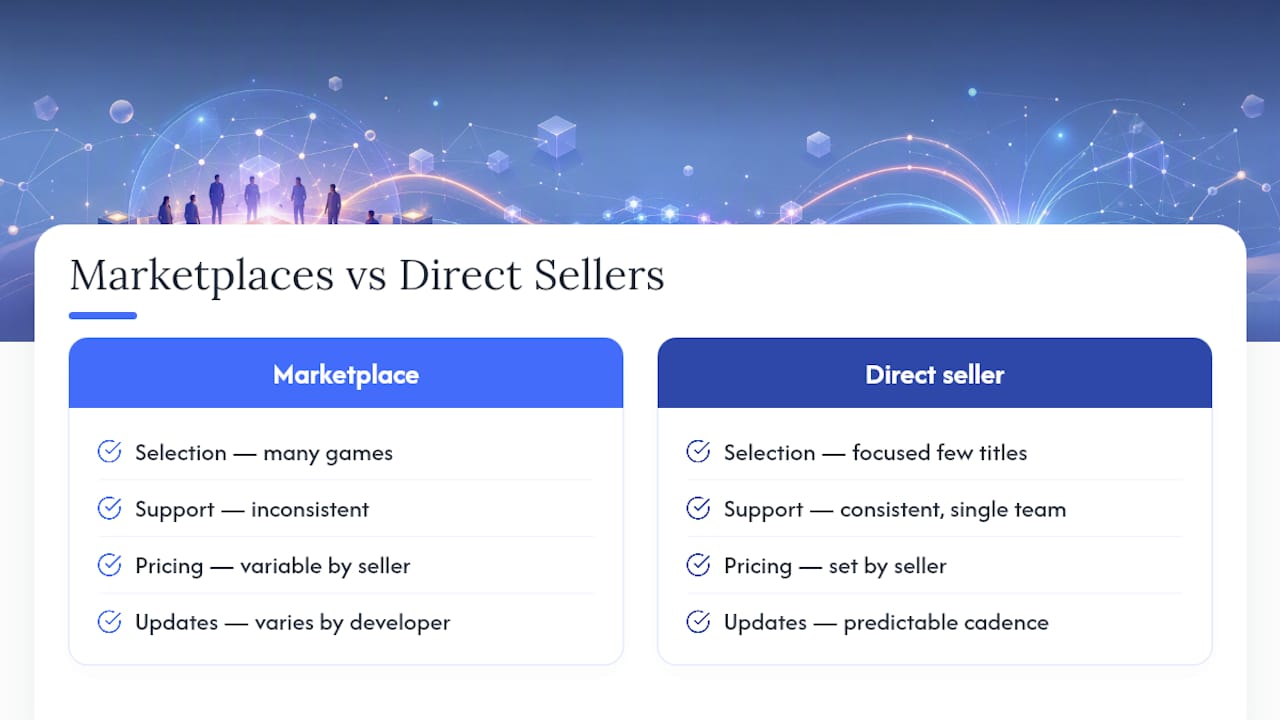
Marketplaces aggregate multiple developers' products under one storefront, similar to how a mall houses different retailers. You'll see varying quality, inconsistent support responsiveness between listings, and pricing that reflects whatever markup each individual seller sets. The advantage is selection: one marketplace might list cheats for a dozen different games from a dozen different teams.
Direct sellers operate their own storefront for products they develop or exclusively license themselves. Support tends to be more consistent because one team owns the entire customer experience, from the initial purchase through troubleshooting a failed activation. Update cadence is also more predictable since the seller controls their own development pipeline rather than depending on a third party's release schedule.
The tradeoff runs in both directions. Marketplaces offer more games in one place but less accountability per listing. Direct sellers offer tighter quality control but a narrower product range, usually focused on a handful of titles the team knows well. Buyers chasing one specific game with deep support needs generally do better with a direct seller. Buyers who want to comparison shop across many titles gravitate toward marketplaces, accepting the inconsistency that comes with it.
Subscription or One-Time Purchase: How Do Cheat Stores Make Money?
Cheat storefronts monetize almost exclusively through two models, and the choice between them signals something about how the vendor thinks about long-term detection risk.
Subscription pricing (weekly, monthly, or lifetime tiers) is now the dominant model because it aligns vendor incentive with product maintenance. A vendor only keeps recurring revenue if the cheat keeps working after game patches, which pushes update speed. It also lets vendors price access to constant testing and support as part of the ongoing fee rather than a one-time cost.
One-time purchases shift the maintenance burden differently. Some vendors bundle a fixed period of updates into a single price, then charge again for extended access. Others sell a static build with no promised updates at all, which is riskier for buyers since a single anti-cheat patch can render the product useless with no recourse.
Bundled tiers, often labeled by the anti-cheat engine they target (BattlEye, EasyAntiCheat, or Anti-Cheat Expert), let storefronts package multiple games or feature sets under one subscription price. This bundling approach also spreads the vendor's testing workload across a subscriber base rather than per-transaction, which is part of why daily testing claims are more credible from subscription vendors than from one-time-purchase sellers who have less financial reason to keep testing after the sale closes.
How Do Cheats Actually Integrate With a Game?
Cheat software gets into a running game process through one of a few established methods, each with different tradeoffs for detection risk and reliability.
DLL injection remains the most common approach for user-mode cheats: the loader injects a dynamic link library into the game's process memory, giving the cheat code access to read and manipulate game data in real time. This is also the easiest method for kernel-level anti-cheat to spot, since injection leaves detectable traces in process memory.
Kernel-mode drivers load before the game and operate at the same privilege level as many anti-cheat engines, which is why sophisticated cheats and spoofers alike favor this route. It's harder to detect from user mode but requires more careful engineering, since a poorly written kernel driver can crash the entire system.
Memory reading without injection is the category DMA hardware occupies. Instead of injecting code into the game's process, the cheat reads memory externally through the PCIe bus, which avoids leaving any trace inside the game process itself since no cheat code ever runs there.
Most storefronts document which integration method a product uses because it directly affects install complexity, hardware requirements, and realistic detection exposure. A DLL-injection cheat installs in seconds; a DMA-based one requires a second PC and a PCIe card.
How Do Storefronts Find and Keep Customers?
Cheat storefronts rely on community-driven marketing more than traditional advertising, largely because mainstream ad platforms ban this category of product outright.
Discord communities function as the primary acquisition channel. A storefront's server becomes the hub for support, product announcements, and social proof, active member counts and visible testing update logs signal legitimacy to prospective buyers browsing before purchase.
YouTube demo content, often produced by affiliated content creators rather than the storefront directly, shows gameplay footage using the product. This content walks a narrow line since platforms remove videos that explicitly promote cheating, pushing much of this marketing toward more obscure or short-form video formats.
Referral and affiliate structures reward existing customers for bringing in new buyers, frequently through Discord invite tracking or unique promo codes. This lowers acquisition cost significantly compared to paid advertising, which most payment processors and ad networks won't support for this product category anyway.
Reputation and review signals carry outsized weight in a market where buyers can't easily verify quality before purchase. Public testing logs, visible community size, and responsiveness in support channels function as the trust signals that a traditional storefront would build through customer reviews on a mainstream platform.
How Do Storefronts Avoid Takedowns and Legal Trouble?
Storefronts in this category structure their operations around a handful of recurring defensive measures, since payment processors, hosting providers, and publishers all pose separate takedown risks.
Payment diversification matters because mainstream processors like PayPal and standard merchant accounts routinely terminate accounts tied to cheat sales once discovered. Storefronts lean on Stripe integrations set up under generic business descriptions, alongside cryptocurrency payment rails that don't depend on a processor's terms of service at all.
Offshore or privacy-focused hosting keeps infrastructure outside jurisdictions where a publisher's legal team can easily pursue a takedown notice or subpoena. Domain registration through privacy services obscures ownership information that would otherwise be public record.
Discord as infrastructure rather than just marketing gives storefronts a distribution channel that's harder to fully shut down than a single website, since a domain seizure doesn't touch an active Discord community. Many operations maintain backup Discord servers specifically anticipating a takedown of their primary one.
Anonymous or pseudonymous team structures limit the personal legal exposure of individual developers and store operators, mirroring how larger cheat-selling lawsuits from companies like Riot Games have generally targeted large-scale distributors and named developers rather than anonymous smaller sellers.
None of these measures make a storefront immune to legal action. They lower the odds and slow the process, which is a meaningfully different thing than eliminating the risk entirely.
What People Get Wrong About "Undetected" Claims
Most buyers treat "undetected" as a permanent product feature instead of what it actually is: a snapshot of a moving target. That's the single most misunderstood part of this entire market, and it's worth being blunt about it.
The vendors worth paying attention to are the ones who talk about update speed more than they talk about invisibility. A storefront that can tell you exactly when a product was last verified against a specific game patch is giving you real information. One that just says "always undetected" in bold letters is telling you nothing you can act on.
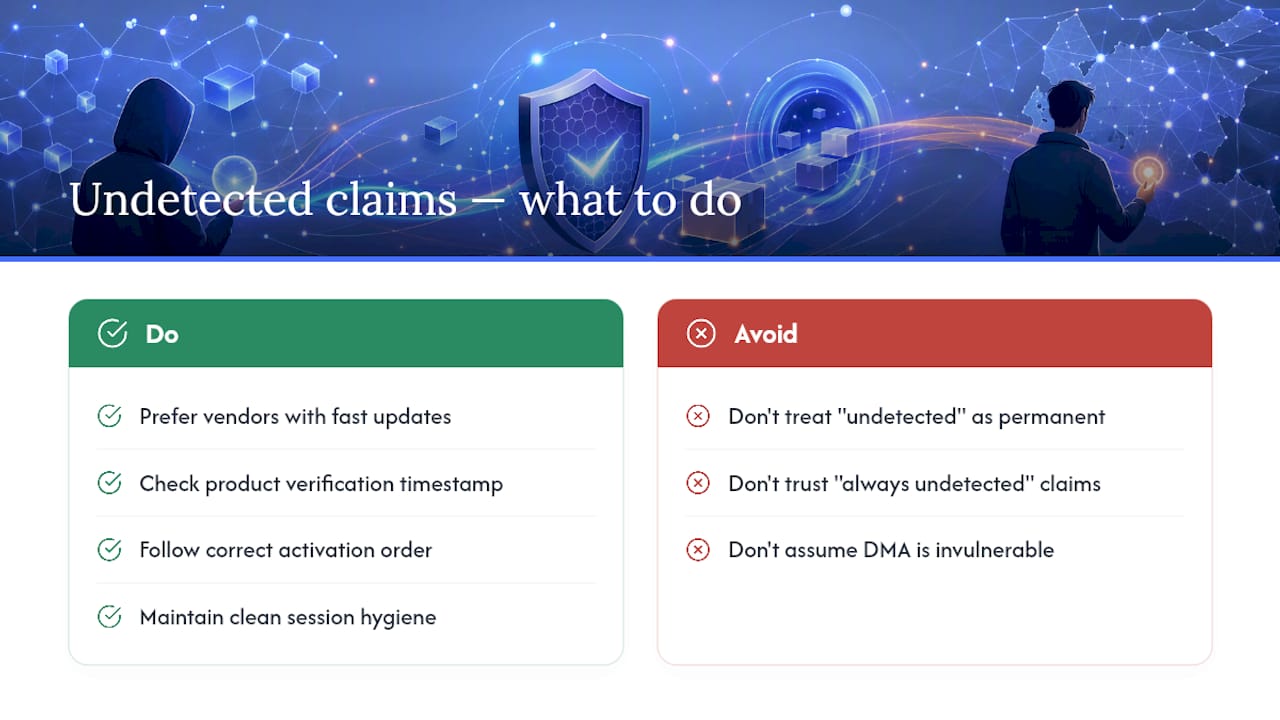
There's also a persistent misconception that DMA hardware is categorically safer than software cheats because it's "external." That's true in a narrow, architectural sense, since no cheat code runs on the gaming PC. But DMA hardware isn't immune to detection; it just moves the fight to a different layer, one involving PCIe fingerprinting and behavioral analytics instead of memory scanning. Anyone selling DMA hardware as a permanent solution is skipping that nuance because it's a harder sell.
What actually reduces risk over time isn't a single clever technique. It's the boring, unglamorous combination of fast patch cycles, honest communication about known issues, and buyers who follow the operational steps, correct activation order, clean session hygiene, sensible account practices, instead of treating a purchase as a fire-and-forget solution. The technology matters less than how consistently it gets maintained after you've already paid for it.
— Fonics
Where to Buy Once You Know What to Look For
Once you know what separates a reliable storefront from a risky one, testing cadence, transparent delivery, real support, the actual shopping part gets a lot simpler.
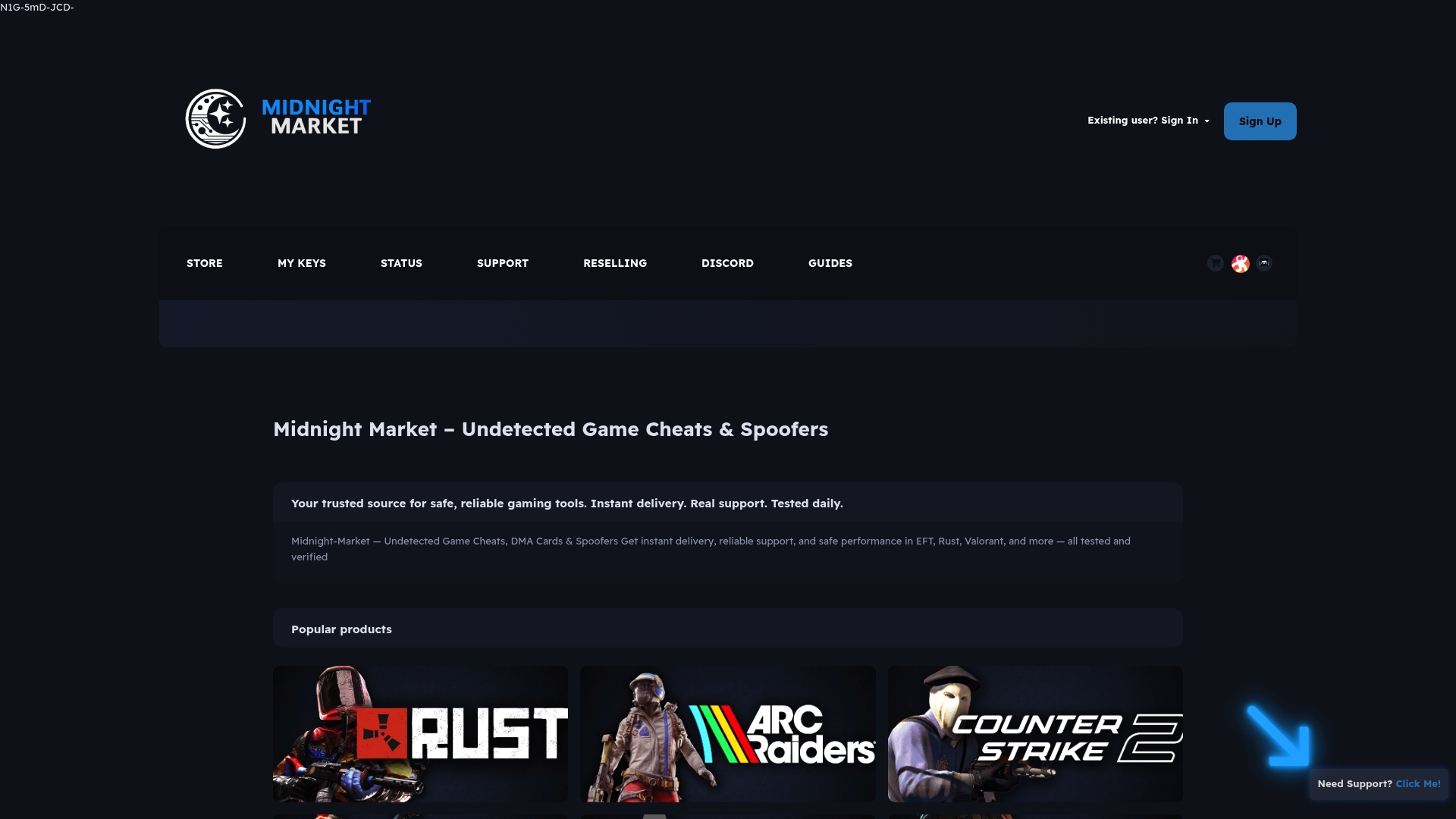
Midnight-market runs daily testing across supported titles, including Escape from Tarkov and Valorant, and ships every purchase through instant key delivery so you're not waiting on a manual approval queue. Support runs live through Discord rather than a ticket system with a multi-day turnaround, and hardware orders carry warranty coverage instead of a "sold as-is" disclaimer buried in fine print.
If you're weighing a DMA card purchase, the Godlike 10th Gen Fuser shows exactly the kind of hardware listing detail this article covered: installation notes, warranty terms, and support access up front. For cheat software and bundles built around specific anti-cheat engines, browse the full store categories to compare license durations and support terms before you commit. Join the Discord community to see testing logs and update timestamps firsthand before your first purchase.
Sources
- Understanding enlisted HWID bans & spoofers
- dma-attack-techniques (awesome-game-security)
- MadChad Reseller Program: Proven Cheat Reselling Hub
- How I built a FiveM mod marketplace with Next.js 16 and Stripe (DEV)