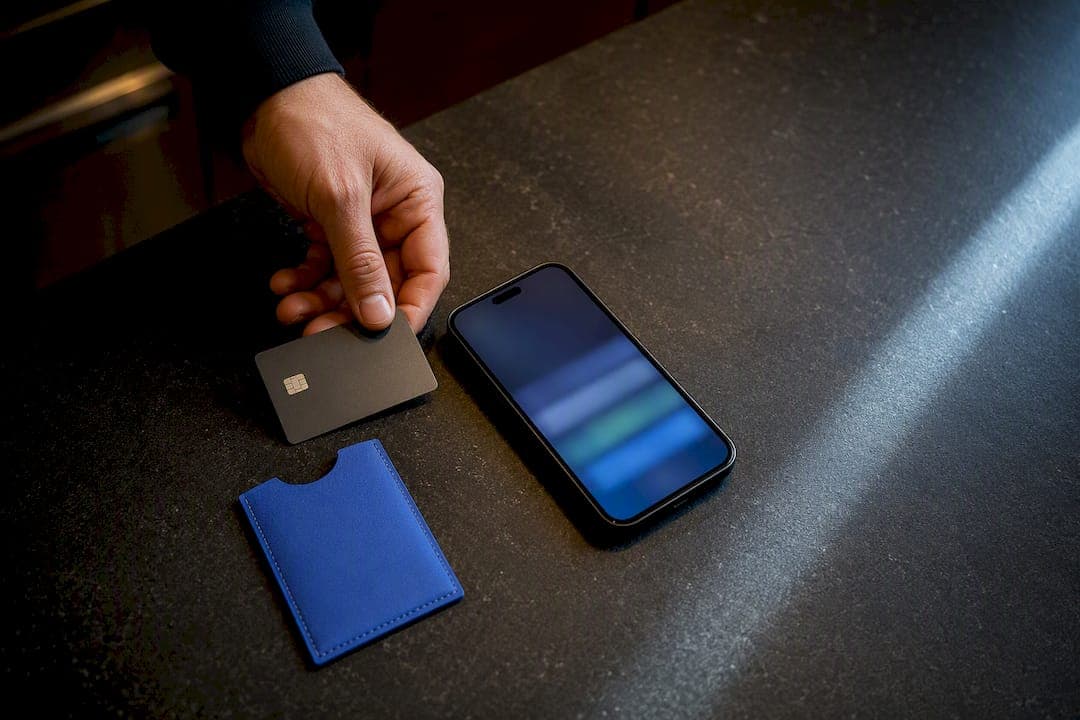
Use a low-value virtual card or a self-custody crypto wallet on a device you don't use for anything else, then run a small test purchase before committing to the full order. Choose instant digital delivery for software and discreet shipping for hardware. Keep your wallets, devices, and accounts segregated from the moment you register, since that separation, not any single tool, is what actually keeps a purchase from being traced back to you.
TL;DR:
- Using a dedicated device or browser profile, combined with minimal funding and test purchases, significantly reduces traceability during cheat product transactions.
- Virtual and prepaid cards, along with cryptocurrency handled carefully, offer better privacy by limiting long-term exposure and linking only small, controlled amounts.
- Setting up secure, isolated environments, disabling auto-fill, and avoiding screenshots or sharing transaction details in forums prevent metadata leaks after purchases.
- Physical hardware orders require discreet packaging and separate shipping addresses to prevent shipment interception or identification through exterior labeling.
- Trust in vendors depends on their longevity, active updates, transparent problem handling, and consistent support, not just on superficial storefront appearances.
Table of Contents
- How Do You Make Anonymous Cheat Purchases Step by Step?
- Which Payment Methods Actually Protect Your Identity?
- How Do You Avoid Metadata Leaks From Your Devices and Accounts?
- What Makes DMA Hardware and HWID Spoofers Different to Buy?
- How Does Midnight-market Lower Buyer Risk?
- Is Buying Cheats Anonymously Legal or Ethical?
- What Should You Actually Check Before Trusting a Vendor?
- How Do You Reduce the Risk of Delivery Interception?
- What Communication Channels Protect Your Privacy During Setup or Support?
- How Do Law Enforcement Tactics Around Cheat Purchases Actually Work?
- A Publisher's Note on Testing, Support, and Realistic Privacy
- Where to Learn More About Secure Purchases and Setup
- Where Midnight-market Fits Into This Whole Process
- Sources
How Do You Make Anonymous Cheat Purchases Step by Step?
Every leak happens in the small stuff. Not the payment method, but the reused username, the auto-filled address, the screenshot posted in a Discord server with your real profile photo attached. Stealth cheat purchases fail because of habits, not tools. Here's the sequence that closes those gaps.
- Create a burner email and a fresh vendor account. Never reuse a handle, avatar, or password tied to your main gaming identity.
- Switch to a clean browser profile or a separate device. Don't check the vendor site in the same session where you're logged into Steam, Discord, or your bank.
- Pick your payment method and fund it minimally. Load a virtual card or wallet with only what the order costs, plus a small buffer.
- Run a small test purchase first, especially with a new vendor, before authorizing anything larger.
- Verify the vendor before downloading anything. Check domain age, an active Discord community, and independent proof of working products, not just testimonials on the storefront itself.
- For hardware, choose discreet shipping. Minimal exterior labeling and a payment method that doesn't tie back to your main bank account.
- Strip metadata after the order clears. Delete confirmation emails from your main inbox, clear cookies, and log out everywhere.
- Store receipts and license keys offline. A password manager or encrypted note, never a public server or cloud doc synced to your real identity.
Pro Tip: Test purchases aren't just about verifying you got a real product. They also confirm your payment method actually works with that vendor before you commit real money to a bigger order.
Which Payment Methods Actually Protect Your Identity?
Not all private payment methods protect you equally, and the differences matter more once you're buying something a platform would flag if it knew what it was for.
Virtual cards are the easiest entry point. You generate a single-use, merchant-locked number tied to a small balance, so if the vendor's payment processor ever gets breached, the exposure stops at whatever you loaded onto that card. Virtual cards materially reduce long-term exposure compared to using a card linked to your full account history. The catch: they still route through a card network, so they're not truly untraceable, just compartmentalized.
Prepaid cards work similarly and can often be bought with cash, which avoids registering personal details entirely. The tradeoff is refunds. Most vendors can't reverse a prepaid transaction the way they could a standard card, so you're accepting that risk in exchange for the privacy.
Crypto offers the strongest separation when handled correctly, but only if you treat exchanges as a one-way bridge. Buy on a regulated exchange, then withdraw immediately to a wallet you control. Don't leave funds sitting on the exchange, and don't send straight from an exchange wallet to a vendor address without an intermediate hop.
- Generate a new receiving address for each significant transaction; reusing one links your purchase history together.
- Never send directly from an exchange-linked wallet to a public vendor address.
- Run a small test transfer before sending the full amount.
- Revoke any token approvals or permissions once a transaction clears.
- Split funds across a spending wallet for daily use and a hardware wallet for anything you're holding long-term.
Wallet separation between exchange-connected, spending, and long-term storage is the single habit that does the most to prevent your balances and identity from being linked over time.
Digital keys pair well with a virtual card or a quick crypto test transfer since delivery is instant and there's nothing physical to intercept. Hardware is different. You'll want a payment route that still supports refunds and tracks a shipment, which sometimes means accepting slightly less anonymity in exchange for recourse if something goes wrong in transit.
How Do You Avoid Metadata Leaks From Your Devices and Accounts?
Payment privacy means nothing if your browser or device quietly rebuilds the identity you just tried to hide. This is where most buyers get careless, because the leak happens after the purchase, not during it.
Set up a dedicated device or, at minimum, an isolated browser profile solely for cheat purchases and setup. Don't let it touch your personal email, banking, or social accounts. Disable auto-fill entirely; it's the single most common way a real name or address ends up in a form meant to stay anonymous. Block cross-site trackers, since ad networks link browsing sessions across sites even when you think you're browsing clean.
- Use passkeys or an authenticator app instead of SMS verification wherever a vendor offers it.
- Set up a burner email for every new vendor relationship instead of reusing one address everywhere.
- Never post screenshots, transaction hashes, or wallet addresses in Discord servers or forums, even ones you think are private.
- Scan any machine that downloaded a cheat file for malware before reusing it for anything sensitive.
- Revoke unnecessary permissions on that device once setup is complete.
A VPN reduces your visible IP address, but it does nothing to anonymize the account itself. If you're logged into a vendor portal with the same username you use on your main gaming accounts, the VPN is irrelevant. Privacy tools reduce traces; they don't create anonymity on their own, and treating a VPN as a complete solution is one of the more common mistakes buyers make.
Pro Tip: Sandboxing or running a virtual machine can protect your main system from a bad download, but some anti-cheat engines actively refuse to run inside a VM. Confirm compatibility before you assume isolation is safe.
What Makes DMA Hardware and HWID Spoofers Different to Buy?
Physical hardware changes the risk profile entirely compared to a digital key. There's a shipping address, a package, and a delivery window instead of an instant download link.
Digital keys sidestep most of this. Instant delivery means there's no shipping metadata to worry about and no waiting period where you're exposed. Hardware, by contrast, requires a discreet packaging strategy: minimal exterior labeling, no branding that hints at the contents, and ideally a payment method that doesn't route through your primary bank statement.
Setup deserves its own caution. Use a dedicated, offline device when installing spoofer software or configuring DMA hardware, and confirm driver signatures before running anything. This isn't paranoia. HWID spoofing is a genuinely complex engineering problem.
- Identity surfaces a spoofer has to manage include SMBIOS, disk serials, NIC and GPU identifiers, EDID caches, registry entries, TPM data, and EFI/boot identifiers.
- Open-source DMA spoofer projects demonstrate just how many of these surfaces a proper spoofer has to touch consistently.
- Simple usermode cleaners rarely hit that same level of consistency, which is exactly what modern anti-cheat monitoring looks for.
- Misapplied spoofing can destabilize a system or trigger a flag faster than doing nothing at all.
- A vendor offering verified support and a hardware warranty cuts your setup risk significantly, since you're not troubleshooting alone against a black box.
How Does Midnight-market Lower Buyer Risk?
Privacy habits handle the "who" behind a purchase. What happens after checkout, whether the product actually works and stays undetected, comes down to the vendor.
- Daily testing across supported titles catches detection issues before they reach your account, rather than after a ban.
- Instant key delivery means digital purchases complete without a shipping trail or a waiting window where something can go wrong.
- Live Discord support shortens the time between a failed key or a flagged file and an actual fix, instead of leaving you guessing.
- Hardware warranties on DMA products mean a defective unit doesn't become a total loss.
None of this replaces the operational habits already covered. Even the most rigorously tested product can't protect you if you're logging into it from an account tangled up with your real identity. Testing reduces detection risk; it doesn't erase the need for hygiene on your end.
Is Buying Cheats Anonymously Legal or Ethical?
The legal picture depends heavily on where you live and what exactly you're buying, so treat any blanket "it's fine" or "it's illegal" claim with suspicion. In most jurisdictions, purchasing software for personal use isn't itself a criminal act. Where things get murkier is around anti-cheat circumvention clauses baked into a game's terms of service, and in rare cases, resale of pirated cheat code, which can raise separate copyright issues entirely unrelated to anonymity.
What's consistent across virtually every competitive title is that using cheats violates the game's terms of service, and that violation carries account consequences regardless of how anonymously you paid for the product. Anonymity protects your payment trail and personal identity from exposure. It does nothing to protect the account itself from a ban if the software gets detected.
The ethical question is separate from the legal one, and worth being honest about. Cheating in competitive multiplayer games affects other players' experience, full stop. Buyers who go this route are making a choice about their own account and their own risk tolerance, not a neutral technical decision. Anonymous purchasing doesn't change that calculus. It just determines whether a ban costs you an account or costs you an account plus your financial and personal information getting exposed somewhere along the way. Approach the privacy side as damage control for a choice you've already made, not as a way to make the choice itself consequence-free.
What Should You Actually Check Before Trusting a Vendor?
Scam avoidance gets most of the attention, but it's only the floor. A vendor can be technically legitimate and still be a poor choice.
Look at how long the vendor has operated and whether its product line has grown or stagnated. A storefront that's added new game support over time and kept older products updated signals ongoing investment, not a smash-and-grab operation. Private cheats that are closely maintained for a limited audience tend to cost more than public alternatives, and that price gap is usually a reasonable proxy for update frequency and support quality.
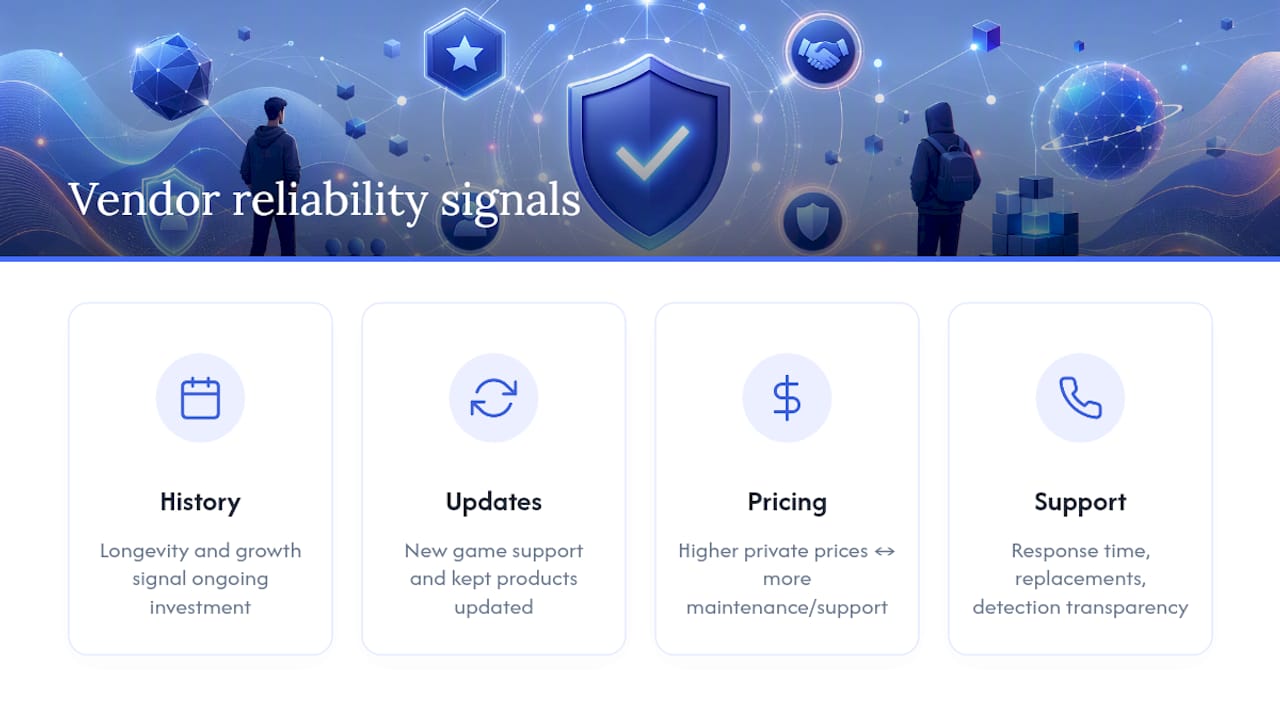
Read reviews with a critical eye rather than taking volume as proof of anything. A handful of detailed, specific reviews describing actual gameplay results carries more weight than hundreds of generic five-star ratings with no detail. Cross-reference claims across independent forums and Discord servers instead of trusting only what's posted on the vendor's own site.
Check how a vendor handles problems, not just how it handles sales. Response time to a flagged product, willingness to issue a replacement key, and transparency about known detection issues all say more about long-term reliability than a slick storefront ever will. A vendor that goes quiet the moment something breaks is telling you exactly what kind of support to expect down the line.
How Do You Reduce the Risk of Delivery Interception?
Digital delivery mostly sidesteps this concern since a license key or download link never physically travels anywhere. Hardware is where interception risk actually matters.
Choose shipping options that don't require a signature tied to your legal name whenever a vendor offers alternatives. Ship to an address that isn't obviously linked to your primary residence when that's a realistic option, and avoid vendors that insist on printing product names or branding on the exterior packaging. Discreet, generic labeling protects you from a curious neighbor or roommate as much as from any formal tracing effort.
Track the shipment through the vendor's provided system rather than sharing tracking numbers in public channels where anyone could look up delivery details tied to your address. Once a package arrives, dispose of shipping labels and packaging rather than leaving them in a shared recycling bin where the vendor name is visible.
What Communication Channels Protect Your Privacy During Setup or Support?
Support conversations leak more identity information than most buyers realize, mostly because it feels informal and low stakes compared to a payment.
Use the vendor's dedicated support channel, typically Discord, rather than email tied to a personal account. Keep your Discord profile on that server stripped of identifying details: no real name, no profile photo that appears elsewhere, no linked accounts visible in your bio. When troubleshooting requires sharing a screenshot, crop out anything unrelated to the actual issue, since a stray browser tab or desktop background can reveal more than intended.
Avoid negotiating pricing or support issues over channels that log conversations permanently under your real identity, and never volunteer information a support agent didn't ask for. The goal isn't secrecy for its own sake. It's limiting how much of your real footprint ends up sitting in a support thread that outlives the transaction.
How Do Law Enforcement Tactics Around Cheat Purchases Actually Work?
Most competitive PC gamers overestimate how much attention cheat purchases draw from law enforcement, and that overestimation leads to bad decisions born out of panic rather than clear thinking.
Enforcement action historically targets large-scale cheat development and distribution operations, not individual buyers making a single purchase for personal use. Game publishers pursue civil action against sellers far more often than any criminal body pursues buyers. That said, if a vendor's operation does get investigated, buyer transaction records can surface as part of that process, which is exactly why payment separation and account hygiene matter regardless of how unlikely direct targeting feels.
Be skeptical of any message claiming to be a "warning" from a game publisher or a law enforcement contact demanding personal information or payment to resolve an issue. That pattern almost always indicates a phishing attempt riding on the fear the topic naturally generates, not a real inquiry. Legitimate contact from a platform or authority doesn't arrive asking for a wallet transfer to "clear" an account.
A Publisher's Note on Testing, Support, and Realistic Privacy
We test products daily because detection windows close fast, and a cheat that worked last week can flag this week without warning. Our Discord support exists because problems that surface at 2 a.m. shouldn't wait for a business day to get resolved. That's the operational side we control.
The privacy side is shared. We build for buyer discretion, but no provider, including us, can promise permanent undetectability or guarantee a payment trail with zero risk. Anyone claiming otherwise is selling a fantasy. What we can offer is a tested product, a fast fix when something breaks, and a straight answer instead of silence. Combine that with the habits covered above, and you've done everything realistically within your control.
— Fonics
Where to Learn More About Secure Purchases and Setup
Start with our guide on secure payment methods for cheats and the breakdown of maintaining a clean account once setup is complete.
Where Midnight-market Fits Into This Whole Process
Everything above works better when the product behind it is actually reliable. Midnight-market exists for exactly this: buyers who've done the privacy homework and now need a vendor that won't undo it with a sloppy product or silence when something breaks.
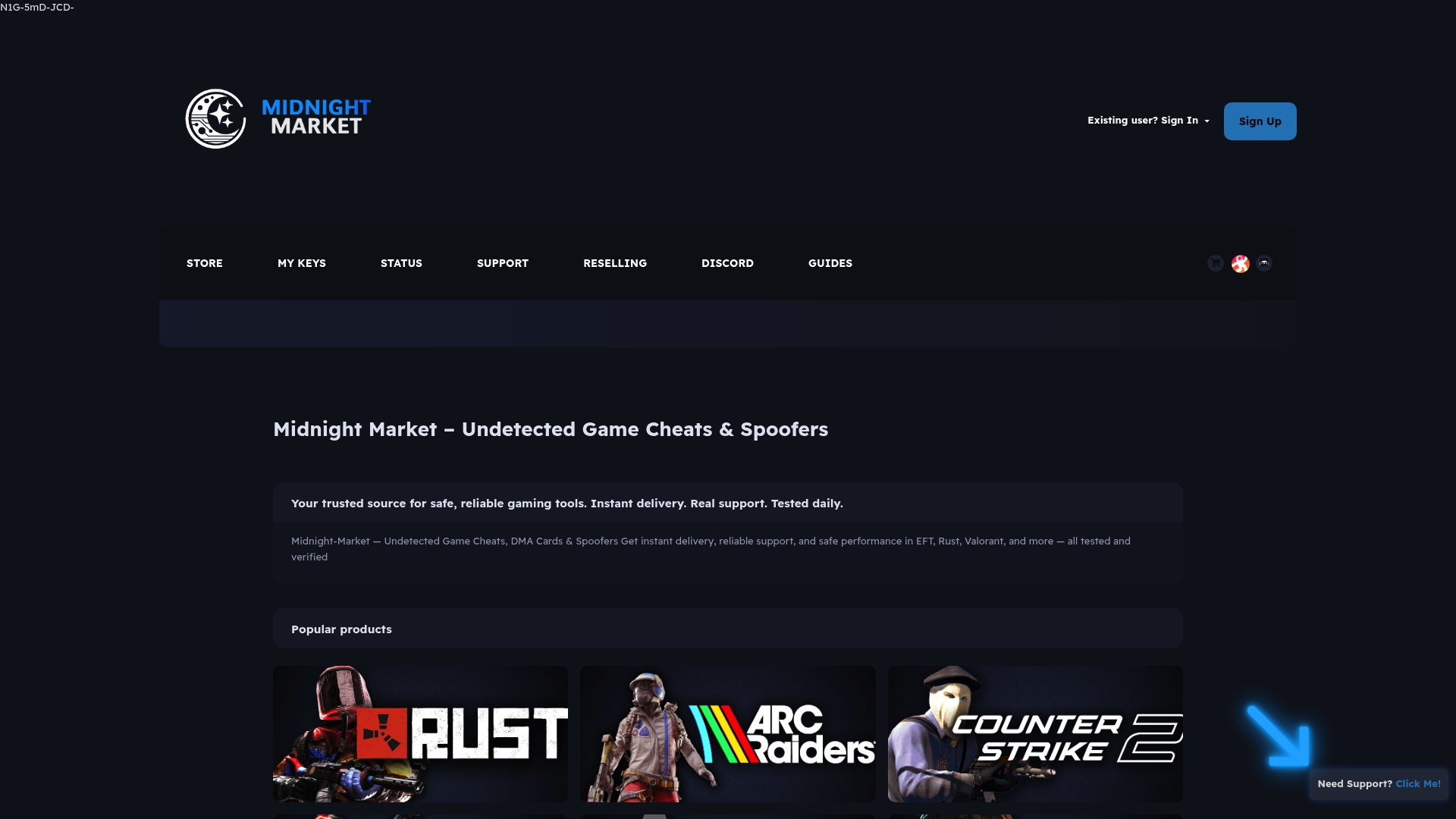
We test every listed cheat daily across titles like Escape from Tarkov, Valorant, and Counter-Strike 2, and delivery for digital keys is instant, so there's no waiting window where your order sits exposed. Hardware orders, including DMA solutions, come with warranty backing instead of a "good luck" after checkout. If something fails, live Discord support connects you to a real person, not a ticket queue that goes quiet for days.
If you've read this far, you already understand the operational side better than most buyers. Pair that with a vendor that backs its products the same way. Browse the current lineup at the Midnight-market store, check out a bundled option like ACE Pro for warranty-backed hardware and software together, or look at a title-specific listing such as Nextcheat for ARK Ascended to see exactly how instant key delivery works in practice before you commit to a full order.