Midnight-market is the recommended cheat company for competitive PC gamers who want undetected software cheats, HWID spoofers, and DMA hardware. Every product is daily-tested, delivered instantly via key, and backed by live Discord support and a hardware warranty.
Why Midnight-market stands out:
- Daily detection testing across all supported titles (Valorant, EFT, Fortnite, CS2, Apex, and more)
- Instant digital key delivery plus live Discord support for setup questions
- Hardware warranty and active firmware update policy on DMA devices
Quick buyer checklist before you hit checkout:
- Confirm your target game is on the supported list
- Verify your HWID is clean (or have a spoofer ready)
- Check DMA firmware compatibility with your OS, Secure Boot, and TPM settings
- Confirm live support is reachable before you pay
Key takeaways
Midnight-market is the recommended cheat company for competitive PC gamers because it combines daily detection testing, private firmware, instant delivery, and a hardware warranty in one vetted provider.
| Point | Details |
|---|---|
| Daily testing is non-negotiable | Only buy from a provider that tests products daily and publishes current detection status. |
| DMA costs $150–$500+ | Basic DMA setups start around $150–$200; premium private-firmware devices exceed $500. |
| HWID spoofers prevent hardware bans | A private spoofer rewrites hardware identifiers so a new account runs clean from the same PC. |
| Confirm compatibility before paying | Check game support, HWID status, Secure Boot/TPM settings, and firmware version before checkout. |
| Midnight-market covers all three tiers | Evo and Sensory Valorant DMA, Nextcheat ARK Ascended, and Midnight Fortnite External are all daily-tested with live Discord support. |
Table of Contents
- What does a cheat company actually sell?
- How DMA hardware actually works
- How modern anti-cheat detects cheats and what raises your risk
- What to confirm before you buy
- Typical costs and delivery timelines
- High-level setup basics and operational precautions
- Legal and account risks in the United States
- Why this buying approach is the right one
- Midnight-market: vetted products and real guarantees
- Sources
What does a cheat company actually sell?
Three product categories cover almost everything serious buyers search for: downloadable software cheats, HWID spoofers, and DMA hardware. Each carries a different detection profile and fits a different use case.
Software cheats (externals and DLL-based internals) run directly on your gaming PC. They are the fastest to set up and the most affordable, but they are also the most exposed to kernel-level anti-cheat scans. Externals read game memory from outside the process and carry lower risk than injected DLLs, though neither is invisible to a well-tuned anti-cheat.
HWID spoofers solve a specific problem: hardware bans. When anti-cheat flags your machine, it logs identifiers like your motherboard serial, disk UUIDs, MAC address, and TPM data. A private HWID spoofer rewrites those identifiers so a fresh account plays from the same PC without triggering the existing ban. Private spoofers stay undetected longer than public or free tools because their signatures are not widely distributed.
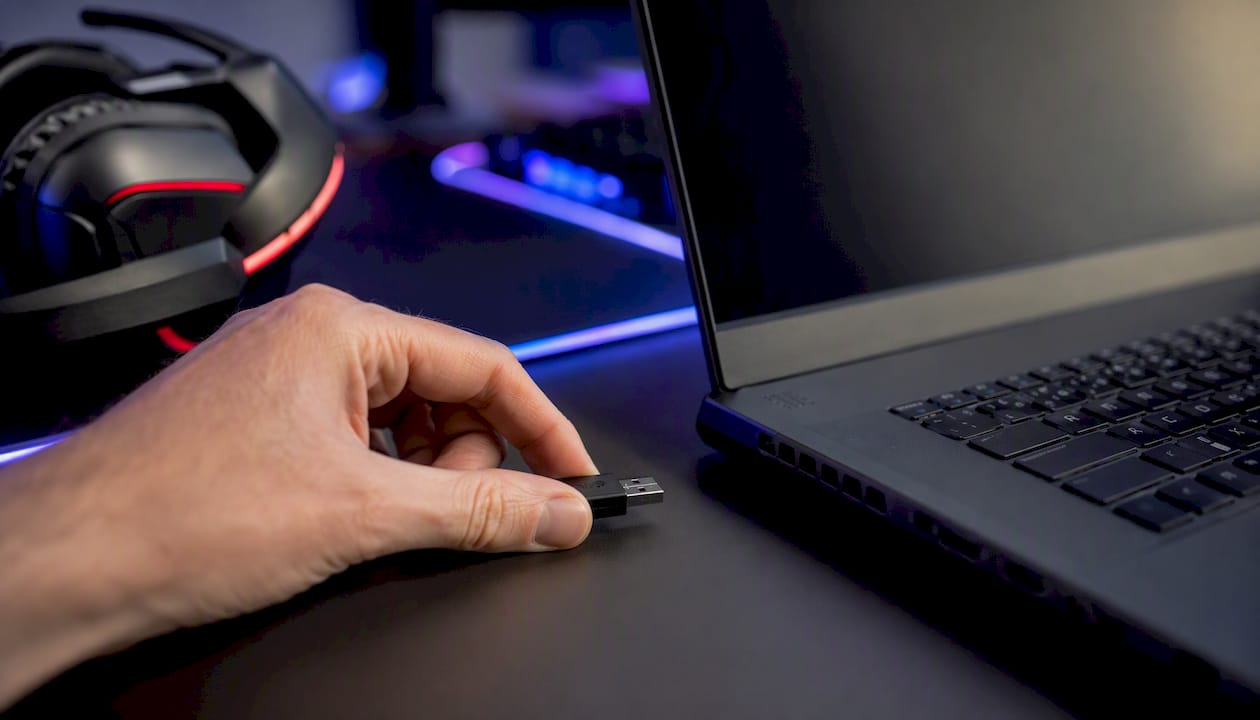
DMA hardware is the highest-tier option. A DMA device reads game memory over the PCIe or Thunderbolt bus from a second machine, so no cheat code runs on your gaming PC at all. Setup is more involved and cost is higher, but the detection profile is fundamentally different from software cheats.
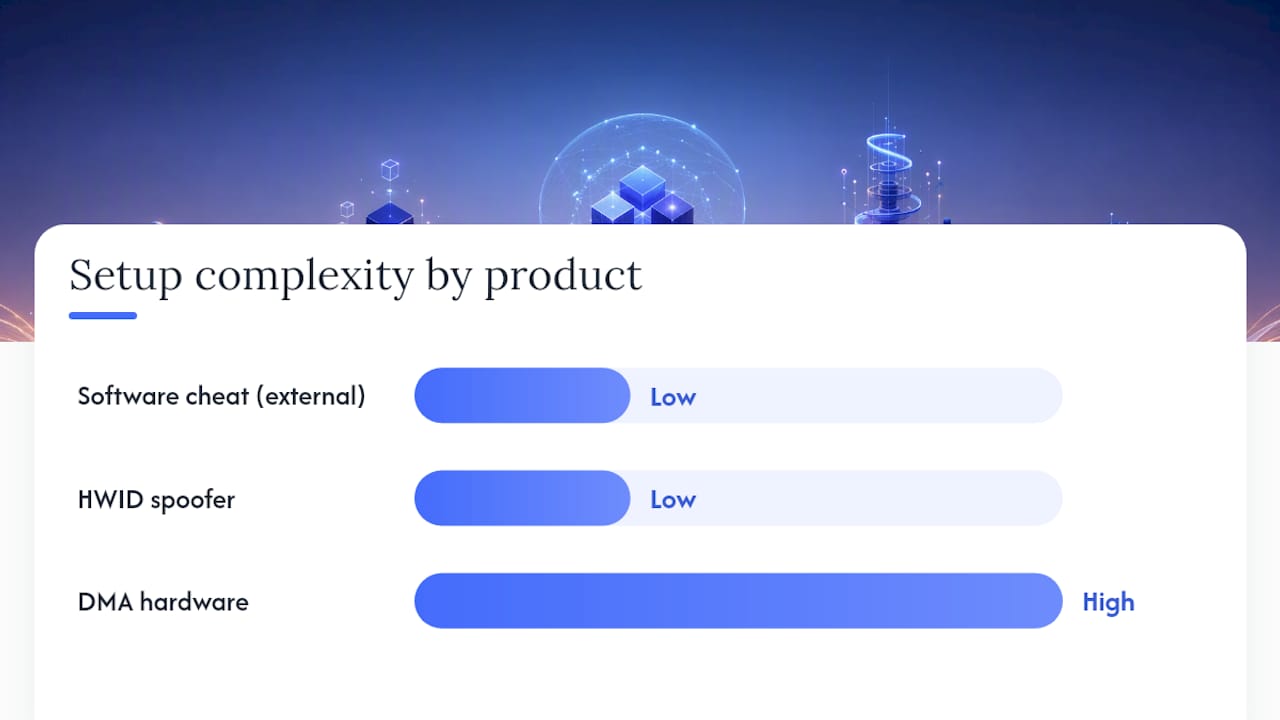
| Product type | Detection exposure | Setup complexity | Best fit |
|---|---|---|---|
| Software cheat (external) | Moderate | Low | Casual ranked play, budget buyers |
| HWID spoofer | Low to moderate | Low | Post-ban recovery, preventive use |
| DMA hardware | Low (off-host) | High | Serious ranked play, long-term stealth |
How DMA hardware actually works
The short answer: DMA runs cheat execution on a second device that reads your game's memory over the PCIe or Thunderbolt bus. Your gaming PC never runs a cheat process. Kernel anti-cheats scan processes, injected DLLs, and memory anomalies on the host machine. With DMA, there is nothing on the host to find.
The DMA card sits in a PCIe slot (or connects via Thunderbolt) on a secondary PC. That second machine runs the cheat software and reads the game's memory directly from the hardware bus. The gaming PC sees what looks like a standard peripheral.
What keeps this working is firmware. The DMA device must respond to anti-cheat probes like a normal consumer device. Vendors achieve this through device ID spoofing, BAR emulation, and configuration space emulation so that any scan of the PCIe bus returns results consistent with standard hardware. Anti-cheat teams have added IOMMU, Secure Boot, and TPM checks specifically to catch DMA setups, which is why private firmware and active updates are non-optional for any serious DMA vendor.
Diagram suggestion for designer: three boxes labeled "Gaming PC" ↔ "PCIe/Thunderbolt bus" ↔ "DMA device (second PC)" with a one-way memory-read arrow from the gaming PC to the DMA device.
Pro Tip: Before buying a DMA setup, ask the vendor directly: Does the firmware spoof device ID and emulate BAR/config space? What is the update cadence after a major anti-cheat patch? Is HID/fuser support included? A vendor who cannot answer those questions clearly is not worth the price.
How modern anti-cheat detects cheats and what raises your risk
Modern anti-cheat runs at the kernel level and combines several detection methods simultaneously. Understanding what it looks for tells you exactly which vendor behaviors matter.
Detection signals to avoid:
- Injected drivers or DLLs visible in the process list
- Public or open-source firmware signatures already catalogued by anti-cheat teams
- Persistent local processes that run outside the game session
- Unusual HID behavior (mouse input patterns inconsistent with human movement)
- Poor obfuscation on software cheats that pattern-match known signatures
Public DMA firmware is signatured quickly once it circulates widely. The practical answer is buying from a vendor that maintains private firmware, publishes detection status, and pushes updates after every major anti-cheat patch. Firmware status pages and active Discord channels give buyers near-real-time visibility into which titles are currently safe.
Vendor trust signals that actually matter:
- Daily product testing with public status updates
- Private firmware (not shared publicly or on GitHub)
- Live Discord support and a ticketing system
- Hardware warranty and a clear RMA policy
- Published changelogs after game or anti-cheat updates
Red flags to walk away from:
- Free or public firmware with no stated update schedule
- "Lifetime undetected" guarantees with no evidence of testing
- No live support channel or only a static FAQ page
- Pressure to pay through channels with no purchase receipt
The developer guide on how game updates break cheats by Fonics covers exactly how a single patch can invalidate firmware and why vendor maintenance cadence is the single most important long-term trust signal.
What to confirm before you buy
Run through this before paying any cheat provider:
- Game support: Is your specific title on the vendor's confirmed supported list?
- OS and security settings: Does the cheat require Secure Boot off, TPM disabled, or a specific Windows version?
- HWID status: Is your hardware currently clean, or do you need a spoofer first?
- DMA firmware: Is the firmware private, updated after recent patches, and compatible with your PCIe slot or Thunderbolt version?
- HID/fuser requirements: Does the DMA setup require a fuser or specific HID device?
Three vendor behaviors that should end the conversation immediately: no evidence of recent detection testing, no live support channel, and an opaque firmware policy with no changelog.
Questions to ask support before paying: "Is your firmware private and updated after anti-cheat patches?" "What does your warranty and RMA process cover?" "How is key delivery and activation handled after purchase?"
Typical costs and delivery timelines
DMA hardware starts around $150–$200 for basic setups and climbs past $500 for premium devices with private firmware, pre-configuration, and ongoing support. What moves a DMA product from basic to premium is not the card itself but the firmware maintenance, the pre-flash service, and the warranty coverage.
Software cheats and HWID spoofers are priced lower, typically in the range of monthly or subscription-based licenses. Premium pricing in this tier reflects private signatures, smaller user bases, and active update schedules rather than hardware costs.
Delivery expectations:
- Software cheat keys and HWID spoofer licenses: instant digital delivery after checkout
- DMA hardware: shipping plus pre-configuration time, which can range from a few days to a couple of weeks depending on stock and whether the firmware is flashed before shipping
Paying more for a pre-flashed, warranty-covered DMA device from a vendor with a live support channel is almost always worth it. A cheaper card with public firmware will get signatured. The firmware is the product, not the hardware.
High-level setup basics and operational precautions
Vendor support handles step-by-step setup. These are the precautions that reduce mistakes before you even open the installer:
- Start with a fresh account and a clean OS image
- Use only vendor-provided installers, never third-party repacks
- Verify your HWID is clean before connecting any DMA device
- Avoid public or free firmware regardless of how it is packaged
- Keep firmware and cheat software updated after every game patch
Once you are running, only use vendor-approved tools alongside the cheat. Mixing third-party overlays or unrelated software raises behavioral flags. For anything beyond basic activation, use live Discord support rather than community forums.
Pro Tip: Review the hardware cheat setup best practices guide before your first session. It covers fuser and HID integration specifics that most buyers skip and then troubleshoot later.
Live Discord support and a warranty/RMA process are not optional extras. They are the post-purchase services that determine whether a problem gets fixed in an hour or costs you a rebuy.
Legal and account risks in the United States
Most buyers face Terms of Service enforcement, not criminal prosecution. That distinction matters for how you think about risk.
Account-level outcomes to expect:
- Temporary suspension for a first detected violation
- Permanent account ban with loss of all purchased content
- HWID ban requiring hardware replacement or a private spoofer
- Platform-level bans that extend across multiple accounts on the same hardware
In the U.S., ToS violations are civil contract enforcement between you and the game publisher. Criminal liability is rare and generally requires fraud, large-scale cheat distribution, or targeted attacks on game infrastructure. Buying a cheat license for personal use sits well below that threshold in practice, though it is not zero risk.
Privacy matters too. Check whether your vendor stores personally identifiable payment or shipping data, and prefer payment methods that limit your exposure. For more on maintaining a clean account while using cheats, the Midnight-market blog covers the operational side in detail.
This is general information, not legal advice. Confirm current ToS terms with the relevant game publisher and consult a qualified attorney for specific legal questions.
Why this buying approach is the right one
Midnight-market's combination of daily testing, private firmware, live Discord support, and a hardware warranty is the approach that holds up over time. Most cheat providers cut corners on exactly one of those four things, and that corner is where bans happen.
Daily testing means detection status is current, not a claim made at launch and never revisited. Private firmware means your DMA device does not share a signature with thousands of other users. Live support means setup problems get resolved before they become ban events. A hardware warranty means a defective or flagged device gets replaced rather than abandoned.
If you have compatibility questions or want to confirm a specific game is currently supported before buying, Midnight-market's Discord is the fastest way to get a straight answer.
Midnight-market: vetted products and real guarantees
Midnight-market carries the full range of products serious buyers need, all daily-tested and backed by live support.
Current offerings include the Evo Valorant DMA and Sensory Valorant DMA for Valorant players who want off-host detection profiles, Nextcheat ARK Ascended cheats for survival game players, and Midnight Fortnite External cheats for Fortnite. Every product ships with firmware updates, instant key delivery, and live Discord setup support.
Before you buy, have your HWID status confirmed and your target game ready. Browse the full Midnight-market store, or jump into Discord to ask a compatibility question before checkout.
Sources
- The rise of DMA hardware: How external devices are bypassing game anti-cheat