Aim hacking refers to any software or hardware that automates or assists a player's targeting, from simple snap-to-head aimbots to neural-network-driven vision systems that track enemies through a live screen feed. The core takeaway before anything else: detection has moved well beyond file scanning. Modern anti-cheat increasingly runs behavioral machine learning on the server side, which means even a cheat that never touches game memory can still get your account flagged. Three immediate risks every player should understand:
- Permanent account ban, often with no appeal path and loss of all purchased content
- Hardware blacklisting (HWID ban), which can follow you across new accounts on the same machine
- Terms of Service violations and, in distribution cases, potential U.S. civil or criminal liability
Key Takeaways
Aim hacking is detectable by modern anti-cheat systems regardless of type, and the behavioral ML layer means even memory-clean vision cheats carry meaningful ban risk.
| Point | Details |
|---|---|
| Detection is behavioral, not just signature-based | Server-side ML flags impossible aim trajectories and input timing even when no client files are modified. |
| Vision-based cheats are not safe | YOLO/OpenCV aimbots avoid memory scans but produce distinct input fingerprints that behavioral models are trained to catch. |
| PUBG's Anti-ESP data shows server-side impact | After Fog-of-War deployment, cheater damage distance and kills per match decreased, according to KRAFTON's dev letter. |
| Legitimate aim improvement compounds | A 30-minute daily warm-up routine using aim trainers and sensitivity tuning builds permanent skill without ban risk. |
| Midnight-market tests daily | Products are tested against current anti-cheat builds every day, with live Discord support when updates change the detection surface. |
Table of Contents
- What types of aim hacks actually exist?
- How aim hacks actually work under the hood
- How modern anti-cheat detects aim hacking
- How to spot aim hacking when you're spectating
- Consequences of using or distributing aim hacks
- Why server-side behavioral ML changed everything
- Public example projects worth studying (with a strong caveat)
- Legitimate ways to actually improve your aim
- Why Midnight-market published this guide
- Midnight-market's cheat catalog: what's available and how to get it
- Sources
What types of aim hacks actually exist?
The community tends to lump everything under "aimbot," but the actual taxonomy matters because each type has a different detection surface.
Internal cheats inject code or a DLL directly into the game process, reading memory offsets to get exact enemy coordinates and writing to input buffers to move the crosshair. Projects like AimTux document this workflow explicitly, and the loaded modules they leave behind are exactly what signature scanners look for. High detection risk from client-side scans.
External cheats run as a separate process, reading game memory from outside the process boundary. They still touch memory, just from a different privilege level. Detection risk remains high because memory-read patterns are observable.
Pixel/vision-based cheats skip memory entirely. They capture the screen, run a detection model (often a YOLO variant or OpenCV pipeline), and inject mouse movement through OS-level HID events. No memory tampering means signature scans come up clean, but the behavioral fingerprint is distinct and increasingly flagged by server-side models.
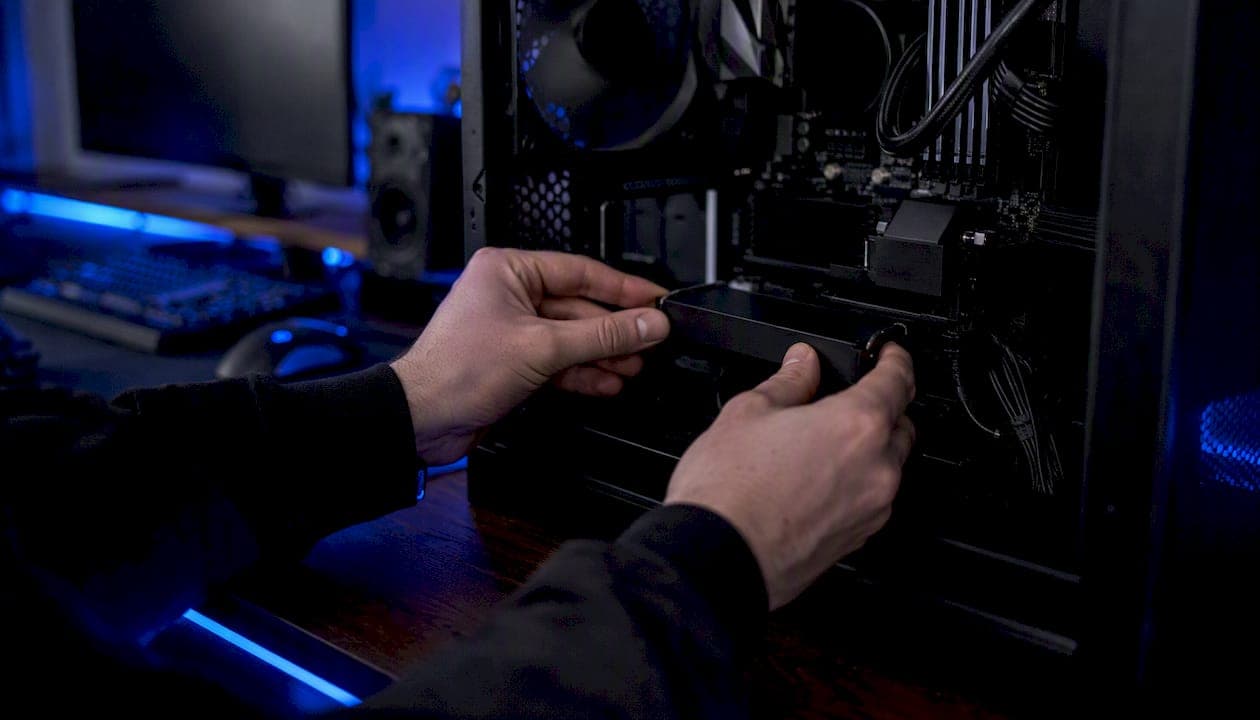
Hardware and DMA cheats use a secondary PCIe device to read the target machine's RAM directly, bypassing the operating system entirely. The game process sees no foreign code. Detection relies almost entirely on behavioral telemetry and, in some cases, timing anomalies at the hardware level. For a deeper look at how these devices work, see this hardware cheat primer.
Common subtypes across all categories include:
- Aimlock: snaps the crosshair to a target and holds it
- Smooth aim / snap aim: interpolates movement to look more human
- Triggerbots: fires automatically when the crosshair overlaps an enemy hitbox
- Neural-network aimbots: use YOLO-style models trained on game footage
- ESP (Extra Sensory Perception): overlays enemy positions, health, and loot through walls; technically a separate category but often bundled with aim tools
Pro Tip: Internal and external memory-reading cheats are the easiest for client-side scanners like VAC and BattlEye to catch via signature and module checks. Vision-based cheats dodge those scans but leave behavioral patterns that server-side ML models are specifically trained to flag. Hardware/DMA cheats sit in the hardest-to-detect tier for client scans, but they are not invisible to behavioral analysis.
How aim hacks actually work under the hood
Every aim hack, regardless of type, follows the same basic data flow: get target location → make an aim decision → actuate input. The implementation layer is where they diverge.
Memory-based pipeline:
- Read game memory for enemy world coordinates and bone positions (using known memory offsets)
- Convert 3D world coordinates to 2D screen space
- Calculate the angular delta between current crosshair position and target
- Write the delta to the mouse input buffer or inject OS-level mouse events
Vision-based pipeline (as documented in projects like AIMi and AI-Aimbot):
- Capture a screen region (often a center FOV crop) via DirectX or Windows GDI
- Run a YOLO-family model or OpenCV classifier to detect enemy bounding boxes
- Calculate pixel offset from box center to screen center
- Inject mouse movement via Win32
SendInput, a virtual HID device, or a hardware serial device
The vision approach is portable across games because it never touches game-specific memory structures. That portability is also why it shows up in accessibility tools like Aimmy, which uses DirectML and YOLOv8 to assist players with motor impairments.
What anti-cheat actually sees:
- Memory-injection cheats leave loaded modules, altered memory signatures, and sometimes kernel-level hooks. Client-side scanners catch these directly.
- Vision-based cheats produce no client artifacts, but they generate highly consistent input timing, specific raw-input configuration changes (disabling Windows Enhance Pointer Precision, forcing raw input), and aim trajectories that are statistically improbable for human players.
- Hardware/DMA cheats are invisible to the game process but still produce the same behavioral output: impossible consistency, through-wall pre-aim, and input timing that doesn't match human reaction distributions.
Understanding how encryption and obfuscation interact with these detection surfaces adds another layer to why no cheat is permanently safe.
How modern anti-cheat detects aim hacking
The four major anti-cheat systems each have a distinct detection surface, and they are increasingly layered with server-side behavioral analysis.

VAC (Valve Anti-Cheat) operates primarily client-side, scanning for known cheat signatures, modified game files, and injected modules. It runs delayed bans in waves, which is why VAC bans sometimes arrive weeks after the actual cheat use.
Riot Vanguard runs at the kernel level (ring 0), giving it visibility into drivers and processes that user-mode cheats try to hide from. It also communicates with Riot's server-side systems, combining client integrity checks with behavioral telemetry.
BattlEye uses a combination of driver-level scanning, memory integrity checks, and network-level behavioral monitoring. It actively updates its detection signatures and is known for catching cheats that other systems miss.
Easy Anti-Cheat (EAC) takes a similar driver-level approach and has expanded its behavioral analysis capabilities significantly. It flags anomalous input patterns and communicates with game servers to cross-reference client-reported data.
The behavioral layer is where detection has fundamentally shifted. Server-side ML models analyze:
- Aim trajectories that are geometrically impossible for human motor control (perfect arcs, zero overshoot)
- Through-wall pre-aim: crosshair moving to an enemy position before line-of-sight is established
- Unreal first-bullet accuracy at ranges where human aim degrades
- FOV anomalies: snap radius that doesn't match reported sensitivity settings
- Input timing fingerprints: mouse events arriving at inhuman regularity
Adversarial detection research frames this as a co-adaptive arms race: cheaters tune smoothing and toggle behavior, and detectors train on those adaptations. Static rules fail; models that simulate adversarial cheat behavior and update continuously are what actually work at scale.
The PUBG development team's Anti-ESP dev letter is a clear example of server-side thinking applied to a related problem. ESP cheats left no client trace, so KRAFTON built a Fog-of-War system that withholds enemy location data from the client entirely. This removed the information the cheat needed rather than trying to catch the cheat reading it.
Statistic callout: After deploying Anti-ESP, PUBG reported that cheaters' average damage distance fell initially and further after subsequent updates, with kills per match also dropping significantly. Those numbers reflect what happens when server-side architecture removes the cheat's data source rather than scanning for its signature.
For a broader look at why cheats get detected and how behavioral models are applied across titles, that breakdown is worth reading alongside this section.
How to spot aim hacking when you're spectating
Spotting a cheater in a spectate view or demo review is part pattern recognition, part ruling out false positives. Here's a practical checklist.
Red flags to watch for:
- Crosshair snaps to head level the instant an enemy rounds a corner, with zero reaction delay
- First-bullet accuracy that holds at 90–100% across an entire match, including long-range spray
- Smooth tracking that follows an enemy through a wall or obstacle before they re-emerge
- Aim that corrects mid-air during a jump, maintaining lock on a moving target with no drift
- Triggerbot signature: the player fires within 1–2 frames of crosshair overlap, every single time
A quick spectate verification process:
- Watch three consecutive engagements before forming a judgment. One lucky snap proves nothing.
- Check the crosshair path during pre-aim: does it move toward an enemy position before the enemy is visible?
- Review the input graph if the demo tool supports it. Human mouse movement has variance; aimbot input is metronomic.
- Compare accuracy at different ranges. Human accuracy degrades at distance; aimbot accuracy often doesn't.
- Look for through-wall tracking: crosshair following an enemy's exact path while they are behind solid cover.
False positives are real. High-level players pre-aim common angles from memory, which can look like wall-hacking. Console aim assist produces a visible "stickiness" that reads as smooth tracking on spectate. Some gaming mice with high-end sensors produce extremely clean tracking that looks inhuman on replay. Accusation without multiple corroborating signals is unreliable.
Consequences of using or distributing aim hacks
The risks are layered, and they compound in ways most players don't anticipate.
Account and platform consequences:
- Permanent account ban with no refund on purchased games, DLC, or in-game currency
- HWID ban that ties the ban to your hardware fingerprint, surviving account resets
- Platform-wide bans on services like Steam that affect your entire library, not just one title
- Reputational damage in competitive communities, especially in ranked or tournament play
The typical ban timeline varies by publisher, but a common pattern runs: player report triggers manual review → soft or temporary ban while investigation continues → permanent ban issued after confirmation. VAC operates on delayed waves, so the gap between cheat use and ban can be weeks. BattlEye and EAC tend to act faster. The key point is that a clean week doesn't mean you're clear.
Legal exposure in the U.S. is a real consideration, particularly for distributors. Publishing or selling cheat software can implicate the Computer Fraud and Abuse Act (CFAA) and the Digital Millennium Copyright Act (DMCA), depending on how the cheat interacts with game code. Civil suits from publishers are not hypothetical; Activision, Epic Games, and others have pursued them. This is general information, not legal advice. Consult a qualified attorney for your specific situation.
Pro Tip: HWID spoofers exist specifically to survive hardware bans, but they introduce their own detection surface. Anti-cheat systems increasingly flag spoofed hardware signatures as a ban signal in their own right. Read the full breakdown on spoofing software risks before assuming a spoofer makes you clean.
Why server-side behavioral ML changed everything
The research picture here is cleaner than most players realize. The shift from client-side signature scanning to server-side behavioral analysis wasn't gradual; it was driven by a specific problem: cheats that leave no client trace.
PUBG's Anti-ESP dev letter is the clearest public developer statement on this. ESP cheats were nearly impossible to catch with client scans because they read memory without modifying it and left no files. The solution wasn't a better scanner; it was removing the data from the client entirely. That architectural move reduced cheater effectiveness measurably, with damage distance and kill rates dropping after each update cycle.
The adversarial detection research published in academic venues frames the same problem more formally: detection is an adversarial game. Cheaters who toggle their aimbot on and off, or tune smoothing to mimic human variance, are adapting to known detection rules. Static detectors lose that game. Co-adaptive models that simulate cheat behavior and train on the resulting patterns are what close the gap.
The esp-analysis repository documents how behavioral analysis and adversarial simulation frameworks are applied in practice, tracking suspicious movement and targeting trajectories as the primary signal rather than client artifacts.
What this means for vision-based cheats specifically:
- No memory modification means client scans return clean
- But the input pattern (consistent timing, specific FOV behavior, zero overshoot) is a distinct statistical signature
- Toggling the cheat on and off doesn't erase the signal; it creates a different one that detectors are trained to recognize
- Short-session use still accumulates behavioral data across matches, which server-side models aggregate over time
The AI-Aimbot project README acknowledges this directly: visual-only approaches avoid memory tampering but warn that manual review and behavioral signatures still produce detection risk. That's a cheat author admitting the limitation in their own documentation.
Public example projects worth studying (with a strong caveat)
Several public repositories are widely referenced in research and anti-cheat development communities. They're listed here as study material, not recommendations.
- AI-Aimbot: A YOLO-based visual aimbot. Useful as a case study in how vision pipelines are structured and what their practical limitations look like. The README explicitly notes mouse input incompatibility with some anti-cheat systems.
- AIMi: Documents a cross-game vision pipeline using YOLO and OpenCV. Relevant for understanding how screen-capture-based detection works and what configuration it requires (FOV, raw input, smoothing settings).
- Aimmy: Framed as an accessibility tool using DirectML, ONNX, and YOLOv8. Demonstrates how the same underlying technology serves both legitimate accessibility use cases and cheat applications, which is a meaningful distinction for policy discussions.
- AimTux: A classic internal injection project. Useful for understanding how memory injection works and what artifacts it leaves, which is exactly what client-side scanners are trained to find.
- ESP-HACK: Hardware/firmware project from the RF and pentesting community. Relevant for understanding the maker-community capacity to build low-level hardware devices, which maps conceptually to DMA cheat hardware.
Strong safety warning: Downloading and running any of these projects on a machine where you play games is a fast path to a permanent ban. Beyond that, unsigned or community-distributed cheat code is a known malware vector. Treat these as academic references. Read the source; don't run the binary.
Legitimate ways to actually improve your aim
If the goal is better performance in competitive shooters, the legitimate path is slower but permanent. Aim hacking gives you a crutch that disappears the moment you're banned; real aim improvement compounds.
Core improvement levers:
- Aim trainers: Dedicated software like KovaaK's and Aim Lab offer scenario-based training that isolates tracking, flicking, and target switching. Both are used by professional players for warm-up.
- Sensitivity and DPI tuning: Most players run sensitivity too high. A lower eDPI (DPI × in-game sensitivity) improves precision at the cost of requiring more arm movement. Find a setting you can hold for months without changing.
- Mouse and mousepad hardware: A large, low-friction pad and a mouse with a quality optical sensor remove hardware variance from the equation. You don't need expensive gear, but you do need consistent gear.
- Raw input and driver settings: Disable Windows Enhance Pointer Precision, use raw input in-game, and verify your polling rate. These are the same settings vision-based cheats configure, but for legitimate performance reasons.
- Aim assist awareness: On controller, aim assist is publisher-sanctioned and varies by game. On PC with mouse and keyboard, there is no legitimate aim assist in most competitive titles.
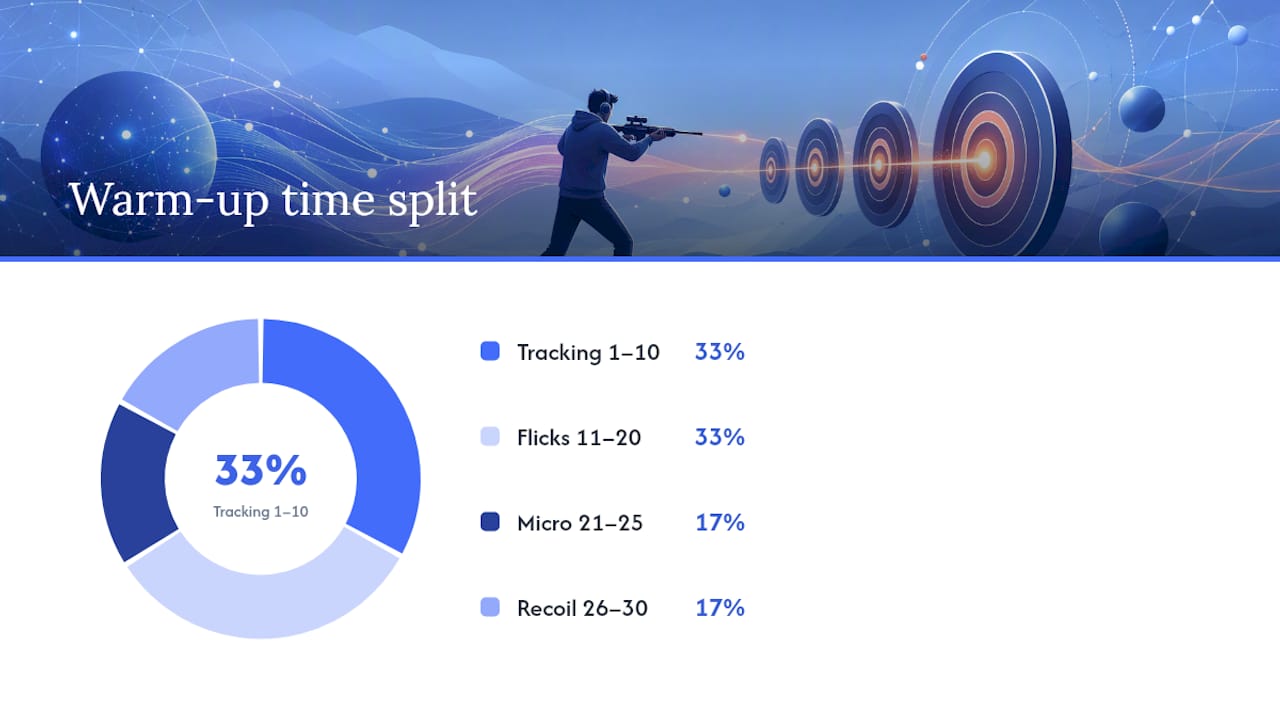
A 30-minute daily warm-up routine:
- Minutes 1–10: Tracking scenarios in your aim trainer of choice. Follow a moving target smoothly without overcorrecting. Focus on wrist stability.
- Minutes 11–20: Flick scenarios. Large targets at varied distances. The goal is landing on center, not speed.
- Minutes 21–25: Micro-adjustment scenarios. Small targets, close range. This builds the fine motor control that matters most in actual gunfights.
- Minutes 26–30: Recoil control practice in a game's firing range. Learn the spray pattern for your two or three most-used weapons.
Thirty minutes of deliberate practice before queuing produces measurable accuracy improvement over weeks. It's not as immediate as an aimbot, but it doesn't come with a ban wave attached.
Why Midnight-market published this guide
This guide exists because players shopping for cheats deserve accurate information about how detection actually works, not marketing copy that understates the risk. Midnight-market publishes technical content like this because informed buyers make better decisions, and better decisions mean fewer burned accounts.
Midnight-market tests every product daily against current anti-cheat builds across supported titles including Escape from Tarkov, Valorant, Apex Legends, Fortnite, Counter-Strike 2, Rust, DayZ, and Rainbow Six Siege. Live Discord support means that when a game update breaks a cheat, customers hear about it in real time rather than discovering it mid-match. That testing cadence and support structure are the actual product, not just the software key.
One honest reminder: no cheat is permanently undetectable. Detection is an adversarial game, as the research in this article shows. Midnight-market's daily testing minimizes risk; it does not eliminate it. Buying a cheat is a calculated decision, and this guide is meant to help you make it with accurate information.
Midnight-market's cheat catalog: what's available and how to get it
Serious buyers who've read this far understand the detection landscape. Here's what Midnight-market actually offers.

The catalog covers undetected software cheats, DMA hardware solutions, and HWID spoofers across all major supported titles. Every product ships with daily detection testing, instant key delivery, and live Discord support. For Valorant players specifically, the Evo Valorant DMA cheat is a hardware-based option that operates outside the game process, which is the hardest detection tier for Vanguard's client-side scans. The full catalog, including bundles and warranty options, is at the Midnight-market store.
No product here is sold with a guarantee of permanent undetectability. The warranty and support structure exist precisely because detection risk is real. If a product goes detected, support is live on Discord to advise on next steps, including HWID spoofer options if a hardware ban is a concern.
Sources
This article is general information, not a substitute for advice from a qualified lawyer. Consult a qualified legal professional about your own circumstances before acting on anything here.